
 YouTube Automation
Best AI Tools for Digital Marketing in 2026 – 9 Proven Picks (Blog#:84)

Every day, you see your competitors growing faster, ranking higher, and making more sales, and you know that AI tools are a big reason why. Working harder is not enough anymore. The game has changed.
The best AI tools for digital marketing in 2026 do not just save time; they help you do more with less effort. You can create better content, reach the right audience, and get real results without feeling burned out.
You do not need many tools, a big budget, or special skills. You just need the right tools that actually work. In this guide, you will discover 9 proven AI tools that marketers use to grow faster, work smarter, and stay ahead in 2026.
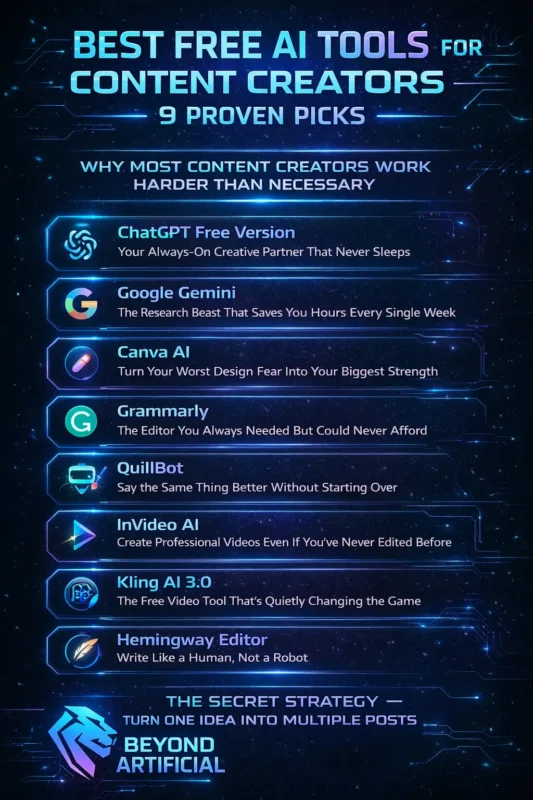
If you want to explore beginner-friendly options, check out Best Free AI Tools for Content Creators to get started quickly.
1. What “AI Digital Marketing Tools” Actually Mean in 2026 (No Tech Jargon)
Think of AI digital marketing tools as a smart helper that works fast and never gets tired. It does not sleep, complain, or waste time. In simple terms, these tools use data to help you write content, run ads, find the right audience, and track what works, without doing everything manually. In 2026, AI tools are not here to replace you. They help you save time by handling boring and repetitive tasks.
Start with just one tool that solves your biggest problem, like writing content, running ads, or managing social media. Do not try to use everything at once, or it will feel confusing. Always give clear instructions to the AI. The more specific you are about your audience, tone, and goal, the better the results will be.
Before publishing anything, read it and add your personal touch. This makes your content feel real and trustworthy. The marketers who succeed are not the ones using many tools; they are the ones using the right tool in the right way.
For video-based marketing, you can also explore the Best Video AI Generator to create high-quality content faster.
2. How to Know Which AI Tool Your Business Actually Needs Right Now.
If you have ever looked at a list of AI tools and felt confused, that is normal. You are just starting in the wrong way. The real question is not which tool is popular? It is: where do I waste the most time, money, or energy? Once you answer that, the right tool becomes clear. Every good tool solves one specific problem.
So think about the task that tires you the most, like creating content, finding leads, running ads, or answering the same questions again and again, and look for a tool made for that. Always try the free version first before spending money. A tool that looks good in videos may not fit your actual work.
Do not choose a tool just because it is trending or others are using it. Choose it because it solves your real problem. The businesses that succeed with AI are not the ones spending more money; they are the ones solving the right problem first.
3. Free vs Paid: Which AI Tools Give You the Best Bang for Your Buck?
Here is the simple truth: Free AI tools in 2026 are very powerful. If you are just starting, you don’t need to spend any money to get good results. Tools like ChatGPT, Canva, and Google’s free SEO tools can handle most daily tasks for small businesses and creators. But as your work grows, you may hit limits while using free tools. That is when upgrading becomes useful. At that point, it is not a cost, it is an investment.
A smart approach is to use the free version first. When you start feeling its limits, you will know what features are worth paying for. Before upgrading, think simply: if a $20 tool saves you a few hours every month, it’s already worth it. Also, do not buy many tools at once. Start with one tool that solves your biggest problem, learn it well, and then move to the next.
The real mistake is not paying too much, but paying too early for tools you do not fully use.
4. The Hidden Skill Nobody Talks About: How to Get the Best Results From AI.
The real difference between marketers who get incredible results from AI and those who quit saying AI does not work for me is simple: it is not the tool, it is how you talk to it. AI is not a mind reader. It responds exactly to what you give it. So when your instructions are vague, the output will be vague too, and that is what kills results and confidence.
Think of AI like hiring a highly skilled assistant. The clearer your direction, the better the work you get back. Always define your audience, tone, goal, and word limit in every prompt. That level of specificity is what turns average AI output into content that actually sounds like you. And if the result isn’t right the first time, don’t start over or give up , just refine your instruction with one more detail and try again. Most of the time, great output is just one improved prompt away.
The smartest marketers don’t rely on perfect tools; they build a system of better instructions. They save their best prompts, refine them over time, and compound their results.
That one skill alone, writing clear, human, specific prompts, is quietly helping individuals outperform entire teams using the same AI tools.
5. How to Measure If Your AI Tools Are Making You Money (Not Just Saving Time).
If you have been using AI tools for weeks or months and still can not clearly say this is making me more money, you are not alone. Many marketers feel this confusion, and it often costs them more than they realize. The main mistake people make is tracking the wrong thing. They feel happy about saving a few hours, but they never check if that time actually led to more sales, more leads, or more income.
A tool that only saves time but does not increase money is not really helping your business. The real question you should ask every month is simple: Did my leads increase? Did my sales improve? Or did my conversion rate go up because of this tool? If none of these numbers change, then the tool is not working for your business. Before you pay for any AI tool, decide on 2–3 clear goals first. For example: more monthly leads, higher clicks, or better ad results. Then check these numbers after 30 days.
Review your results every month on the same date. Treat it like a business checkup. If nothing improves in 60 days, either change how you use the tool or stop using it. Do not judge AI tools by how advanced they look or how many features they have. Judge them only by one thing: do they help you make more money?
The marketers who get the best results are not the most technical. They are the ones who honestly track their numbers every month.
6. The New SEO Nobody Is Talking About: How AI Tools Help You Rank in AI Search Results.
Right now, millions of people are asking ChatGPT, Google Gemini, and Perplexity questions that your business can answer. If your content is not showing up in those AI answers, your competitors are getting those customers instead. This is a new type of SEO. It is called GEO (Generative Engine Optimization). It means writing content in a way that AI tools can easily understand and recommend.
The good news is you don’t need to be technical. You just need to write clear and simple content that answers questions directly. Start your blog posts or pages by answering the main question in the first 2–3 sentences. Do not make readers scroll through long introductions. AI tools prefer content that gets straight to the point.
Write answers to real questions people ask, like “how do I…”, “what is the best…”, or “which tool is best for…”. These match how people search in AI tools. Also, make sure your business name, topic, and location are clear and consistent on your website and Google profile. AI tools trust information that is repeated and consistent.
The businesses that will win in the next few years are not the ones spending the most on ads. They are the ones who start writing for AI search early, while others are still using old SEO methods.
If you want to improve your writing quality, see Best Paraphrasing Tools for Content Creation for better content output.
7. What Happens When You Rely Too Much on AI (And How to Avoid It).
There is a quiet risk in marketing when you let AI make all your decisions. Slowly, your content starts to sound like everyone else’s. Your audience may stop trusting your voice, and your brand can start to feel less human. Using too much AI does not just hurt creativity. It also removes the real human understanding of your audience, what they feel, what they fear, and what they truly want to hear from you.
The marketers who struggle the most are not the ones who used AI a little. They are the ones who gave it full control and forgot that people connect with people, not perfect automated content. Make a simple rule for yourself: always add at least one personal story, real opinion, or unique idea to every piece of content AI helps you create. This keeps your content human and more interesting.
Never let AI decide your main message, your brand values, or how you respond to customers. These things need human thinking and judgment. Before publishing, read your content out loud. You will notice awkward or robotic sentences more easily. Even one strange sentence can make readers feel the content is not human.
The most important rule is simple: AI should help you, not control you. You are still in charge, and your audience can feel the difference.
8. How Small Businesses and Solo Marketers Can Win Big With These Tools.
If you have ever felt that AI tools and big marketing success are only for companies with big teams, big budgets, and tech experts, that feeling is understandable, but it is not true. In 2026, one person with the right AI tools can compete with, and even beat, much larger companies. The game has changed. Small and fast marketers now have an advantage because big companies move slowly, while you can test and use new tools quickly.
You do not need a team or a big budget. You only need a few good AI tools for content, social media, and customer communication. With these, you can do the work of a full marketing team in just a few hours a day. Start with simple tools like ChatGPT for writing, Canva AI for design, and a free scheduling tool for posting on social media. These can save you a lot of time each week.
Use the extra time to do what AI cannot do: build real relationships with your audience. Talk to them, share your story, and reply to comments and messages in a real, human way. Try this routine: spend one hour every Monday planning your content with AI. Create everything, schedule it, and then focus the rest of your week on sales, service, and growth instead of rushing for ideas every day.
The people winning with AI right now are not the most skilled or experienced. They are the ones who started using it early and stayed consistent with it.
9. Your Simple Step-by-Step Plan to Start Using AI Tools Today (Even If You are a Beginner)
The most honest thing about starting with AI tools is this: the first step feels hard, the second step feels easier, and by the third day, you will wonder how you ever did marketing without them. So don’t wait for the perfect moment, just start today with what you have. You do not need a course, a certificate, or technical skills. Just open a free ChatGPT account, type your biggest marketing problem like you are texting a friend, and see what answer you get.
The key in the beginning is simple: treat your first week as practice. Try things, make mistakes, get strange results, and learn from them. Everyone who uses AI today started this same way. In your first week, choose one task you do not like, like writing a caption, product description, or email. Ask ChatGPT for help, edit the result in your own style, and post it. This small step helps you get started.
In your second week, add one more tool like Canva AI and create simple designs in minutes. You will start to feel how much easier your work becomes. In your third week, try this goal: use AI to plan and create a full week of content in just a couple of hours, then schedule it all.
The difference between people who succeed and fail with AI is not skill or experience. It is simply starting now instead of waiting to feel ready.
Final Conclusion: Which 3 AI Tools Should You Start With Right Now?
After reading this, if you still feel unsure about where to start today, here is a clear answer.
Start with ChatGPT for writing and ideas, Canva AI for designs, and Google’s free SEO tools to understand what people are searching for. These three tools cover most daily marketing tasks and cost nothing to begin. These are not the most fancy tools, but they are very useful. They will save you time, help you learn fast, and show you real results without spending money.
The most important advice is this: do not close this and tell yourself, I will start tomorrow. Because tomorrow keeps delaying your progress, while others are already moving ahead. Open ChatGPT right now. Type your biggest marketing problem, like writing captions, emails, ads, or blog ideas. Read the answer, improve it in your own words, and publish it today. This one step will help you more than reading many articles.
After 2–3 weeks, you can add one more tool from your list based on your next biggest need. Learn it, use it well, then add another. The most successful people using AI are not the ones who know the most. They are the ones who use it regularly, even if it is not perfect. You already have enough knowledge to start. The only thing left is to take action now.
If your goal is earning with AI, do not miss Best AI Tools for Making Money to explore real income strategies.
FREQUENTLY ASKED QUESTIONS (FAQs)
Which AI tool is used for digital marketing?
In 2026, many AI tools will help with digital marketing, and the best one depends on what you need most. ChatGPT helps with writing and content, Canva AI with design, Semrush with SEO research, Meta AI with social media ads, and HubSpot AI with emails and customer management. The good news is that all of these tools have free plans, so you can start using them today without spending any money.
What is the 3 3 3 rule in marketing?
The 3-3-3 rule in marketing is a simple way to keep your strategy focused. It means: the right audience, the right message, and the right time. You choose 3 target audiences, 3 main messages, and 3 marketing channels. Instead of trying to be everywhere, you focus on what matters most. With AI tools, you can quickly find your audience, create your messages, and plan content for your channels in less time.
Which AI is better than ChatGPT?
Better than ChatGPT depends on what you need it for. In 2026, different AI tools are better at different tasks:
- Claude is better for long, natural-sounding writing
- Google Gemini is better for real-time search and Google tools
- Perplexity AI is better for research with sources and facts
- Jasper AI is better for keeping a consistent brand voice
The best approach is not to use only one tool. Use each one for what it does best. For example: ChatGPT for ideas, Claude for writing, Gemini for research, and Perplexity for facts.
What is the best AI business to start in 2026?
If you want to start a business but thought you needed a big team, a degree, or a lot of money, 2026 makes it much easier. Now, anyone with a laptop and a willingness to learn can start. Some popular AI business ideas are:
- AI content writing for blogs and social media
- AI social media management for clients
- AI video editing using tools like CapCut and Descript
- AI SEO services for Google and AI search ranking
- AI chatbot setup for small business customer support
You can start all of these with free or low-cost AI tools and no employees. The main question is not can you do it? But which one will you start with first?
What is the most powerful AI in 2026?
In 2026, there is no single best AI tool. Different tools are best for different jobs. GPT-5.4 is one of the strongest all-purpose AI tools. Google Gemini 3.1 Pro is great for search and real-time information. Claude Sonnet 4.6 is strong for natural writing and creative work. For marketers, the “best” AI is the one you use regularly. A simple free tool used every day is more useful than a powerful tool you do not use.
Best AI tools for digital marketing in 2026, free
If you have reached this part and you are still thinking, This sounds good, but I can not afford paid tools, then this section is for you. The truth is, the best AI tools for marketing in 2026 are free, and they are powerful enough to help you grow your business without spending any money. Most people think budget is the problem, but the real problem is not knowing which free tools to use. This guide has already shown you that.
Here is your simple free starter list:
- ChatGPT (Free): Write content, captions, emails, ads, and ideas quickly.
- Canva AI (Free): Create social media posts, thumbnails, and designs easily without design skills.
- Google Search Console (Free): See what people are searching for and improve your content.
- Meta AI (Free): Get ideas for ads and understand your audience on Facebook and Instagram.
- CapCut (Free): Edit videos for TikTok and Reels with easy AI tools like captions and auto edits
These five tools cover writing, design, SEO, ads, and video editing. With them, you already have everything you need to start marketing like a professional, even without a budget. You just need to start using them today.