
 YouTube Automation
What Is a YouTube Automation Business – 9 Powerful Tips (Blog#:46)

Imagine waking up in the morning and seeing money already in the bank, without rushing to work, answering to a boss, or feeling burned out. That is exactly what a YouTube automation business enables for thousands of people today. Many people work very hard every day but still feel stuck, wondering whether there is a smarter way to earn income without sacrificing all their time.
A YouTube Automation Business offers that smarter path. With the help ofAI tools, freelancers, and simple systems, profitable YouTube channels can run almost automatically, even while you sleep. Some people think this idea is complicated or only for tech experts, but that is not true. Anyone can start with the right guidance.
In this guide, you will learn 9 powerful secrets that can help turn this idea into a real opportunity.
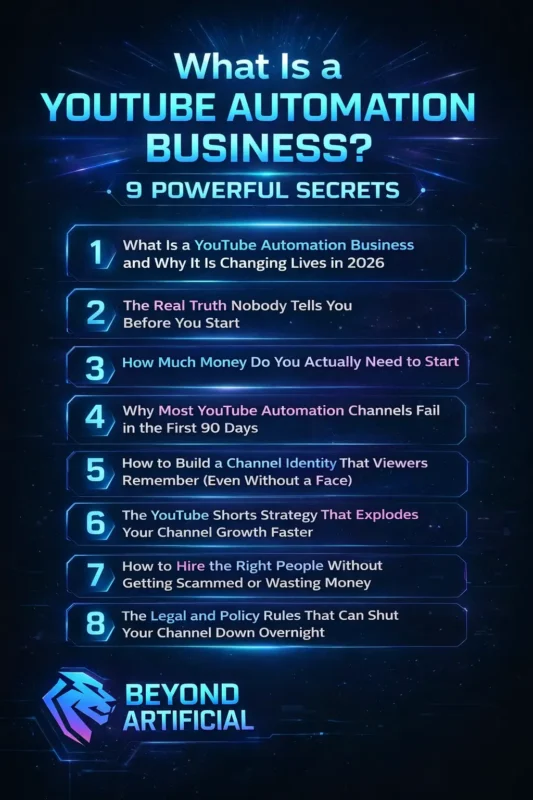
Keep reading to discover the powerful secrets that turn a simple idea into a real YouTube income system. If you want to go even deeper, explore our complete guide to starting a YouTube automation business, which breaks down the exact steps beginners can follow to build their first automated channel.
1. What Is a YouTube Automation Business and Why It Is Changing Lives in 2026.
Millions of people dream about financial freedom, but many feel stuck because they do not want to appear on camera, lack technical skills, or simply do not know where to begin. A YouTube Automation Business helps solve these problems by allowing you to build and grow profitable YouTube channels with the help of AI tools and freelancers, without showing your face, recording your voice, or editing videos yourself.
Think of yourself as the director, not the actor. You decide the niche, approve the ideas, and guide the strategy while your team or tools handle most of the work and keep your channel running.
Simple tips: Start with one strong niche such as finance, health, or technology. Focused channels usually grow faster and often earn more money per thousand views than channels that post random content. From the beginning, treat your channel like a real business. Upload consistently, track your video performance, and reinvest your early earnings into better scripts and smarter tools. Another useful tip: Use free AI tools like ChatGPT for writing scripts and simple editing tools like CapCut to keep your starting costs very low while you learn how the system works.
The good news is that in 2026, YouTube automation has become more beginner-friendly than ever. The only real step left is deciding to start.
2. The Real Truth Nobody Tells You Before You Start.
Many beginners are told that YouTube automation is an easy way to earn passive income, but most “gurus” leave out the hardest part of the truth. Because of this, many people spend months trying different things, lose money, and give up before they ever see real results. The truth is that a YouTube automation business is not a simple “set it and forget it” system. It is a real business that needs your planning, your decisions, and your patience, especially during the first few months when growth is slow, and doubts start to appear.
You probably will not become rich in 30 days, but if you follow the right system and stay consistent, your channel can grow step by step over time. Simple Tip: Before spending money on freelancers or AI tools, spend about two weeks studying your niche. Look at the top channels, see what their audience enjoys, and note the topics they are not covering. Think of every video as data, not luck. Check your click-through rate, audience retention, and traffic sources each week so you can improve your strategy.
Another useful Tip: Give yourself a 90-day commitment. Upload consistently for three months before judging your results, because many successful channels almost quit right before things started working. In the end, the creators who succeed with YouTube automation are not always the most talented. They are simply the ones who stay consistent, learn from their data, and keep going even when progress feels slow.
3. How Much Money Do You Actually Need to Start?
If you feel worried about not having enough money to start a YouTube automation business, you are not alone. Many beginners think they need thousands of dollars, but the truth is that you can start with a very small budget. In 2026, creating videos can cost as little as $1–$3 per video by using simple AI tools. You do not need a camera, studio, or a full team in the beginning. Your ideas and consistency matter much more than how much money you have.
A smart way to start is by growing your budget in stages. Begin with free or low-cost tools, then reinvest the money your channel earns into better tools or freelancers as your channel grows. Simple Tip: You can build a very cheap starter setup for under $30 per month. Use ChatGPT for writing scripts, ElevenLabs Starter for voiceovers, and CapCut for editing. Keep using this simple setup until your channel earns its first $100.
Many beginners make the mistake of spending too much money on expensive courses, premium tools, or large freelance teams before their channel even grows. In the early stage, it is better to protect your money and learn the system first. Another Tip: Only invest money you can afford to lose at the start. Treat your first $50–$100 as a learning budget and track every dollar you spend so you understand what works and what does not.
Remember, success in YouTube automation does not depend on a big budget. Starting small and improving step by step is often the smartest path.
4. Why Most YouTube Automation Channels Fail in the First 90 Days.
If you have already tried starting a YouTube automation channel and stopped because nothing seemed to work, you are not alone. Many channels do not fail because the idea was bad, but because beginners are not prepared for the challenges of the first 90 days. The most common problems are choosing random trending topics without a clear niche, spending money too early on outsourcing, and expecting monetization to happen very quickly.
When these problems happen together, many beginners lose motivation and quit before they ever see real growth. In 2026, YouTube pays a lot of attention to viewer retention, especially in the first 30 seconds of a video. If viewers leave early, the algorithm may stop recommending your video to new people. SimpleTip: Before publishing a video, make sure the first 30 seconds clearly explain the viewer’s problem, promise what they will learn, and deliver a useful point right away.
This helps keep viewers watching and improves your chances of growth. Automation alone will not guarantee success. If your topics are not well researched or your message is unclear, automation can simply make those mistakes happen faster. Another Tip: Decide your niche and audience before creating videos. Write a simple sentence like, “My channel helps [type of people] solve [specific problem].” Use this idea to guide every video you create.
Many successful faceless YouTube channels take 6 to 18 months to build a steady income. Most people quit too early because they expect fast results, even though slow and steady growth is normal in the beginning.
5. How to Build a Channel Identity That Viewers Remember (Even Without a Face).
Many faceless creators worry about one thing: if viewers never see them, will people really trust the channel or come back again? The good news is that trust can still grow, even without showing your face, if your channel has a clear and consistent identity. Your channel name, logo, banner, thumbnails, and descriptions should all follow the same style. When viewers cannot remember a person’s face, they remember the look, tone, and feeling of the channel instead.
Simple Tip: Choose one color palette, one thumbnail style, and one tone for your videos, for example calm and educational, energetic and curious, or friendly and motivational. Use the same style in every video so viewers start to recognize your channel easily. It is also helpful to keep the same AI voice for all your videos. When people hear the same voice again and again, it becomes part of your channel’s identity.
Another useful Tip: Write a simple one-sentence promise for your channel, such as “This channel explains complex finance topics in simple ways.” Use this promise to guide every video idea you create. Today, many successful faceless channels focus more on valuable content than personal appearance. When your videos consistently help viewers, they start to trust your channel even without seeing the person behind it.
6. The YouTube Shorts Strategy That Explodes Your Channel Growth Faster.
If you have been uploading long YouTube videos for months but your channel is barely growing, you may be missing one of the fastest growth tools available today, YouTube Shorts. Shorts are designed to reach new viewers quickly. They can help beginners gain views, subscribers, and early momentum much faster than long videos alone. However, Shorters usually earn much less money. The RPM for Shorts is often around $0.01–$0.06 per 1,000 views, which means they are better for growing your audience rather than making a high income.
That is why many smart creators use a simple strategy called the Shorts-to-Long-Form Pipeline. They use Shorts to attract viewers and then guide those viewers to their longer videos, where the real revenue potential is higher. Simple tip: Take the best 30–45 second idea from your long video and turn it into a Short. Publish the Short first and add a clear message telling viewers to watch the full video for more information. Shorts must grab attention quickly, so the first two seconds are very important.
Start with a strong hook, share one useful idea, and end with a reason for viewers to continue watching your main content. Another tip: Try creating several Shorts in one session each week using simple AI tools. Write the script with ChatGPT, generate the voice with tools like ElevenLabs, and edit quickly in CapCut so you can post regularly while working on your long videos.
7. How to Hire the Right People Without Getting Scammed or Wasting Money.
Hiring freelancers can sometimes be frustrating, especially when you pay for work, and the result is not what you expected. If this has happened to you before, it is important to know that many beginners face the same problem because they do not yet have a clear hiring system. One common mistake is choosing the cheapest freelancer and hoping the work will be good. Very low prices often mean the freelancer needs a lot of guidance, which can lead to wasted time and money.
A better approach is to follow three simple steps. First, look for freelancers who have a strong portfolio in your niche. Second, give them a small paid trial project to test their quality. Third, only continue working with them if the trial shows they understand your channel style and expectations. Simple Tip: Before posting a job on platforms like Fiverr or Upwork, create a short document explaining your channel. Include your niche, target audience, tone, and a few example videos you like. This helps freelancers understand your vision before they start.
Clear communication also makes a big difference. Ask freelancers to share their work in stages so you can review it early and avoid bigger problems later in the process. Another Tip: Watch for warning signs before hiring. If a freelancer cannot show good samples, pushes you to pay quickly, or promises extremely fast results for very low prices, it is usually safer to look for someone else.
When you find reliable freelancers, treat them as long-term partners. Paying fairly, giving clear feedback, and building a good relationship can help your YouTube automation business grow much more smoothly.
8. The Legal and Policy Rules That Can Shut Your Channel Down Overnight.
Imagine spending months building your YouTube automation channel, uploading videos regularly, and finally seeing your audience grow, only to wake up one day and find your channel completely removed because of a rule you did not know about. This can happen because YouTube follows a strict three-strike copyright system, where three violations can permanently delete a channel.
Many automation creators trigger these strikes by accident. They may use music, video clips, or images they believe are free, but are actually not allowed for commercial use on YouTube. It is important to understand that “royalty-free” does not always mean free to use anywhere. Some content still requires a license. If you use unlicensed material, you may receive a Content ID claim, which sends your video’s earnings to the original owner.
Tip: Create a safe library of content before you start publishing videos. Use trusted sources like the YouTube Audio Library for music, licensed services such as Epidemic Sound or Artlist, and free visual sites like Pexels or Pixabay. Always keep proof of any licenses you use. YouTube is also becoming stricter about low-quality or repetitive content. Channels that publish generic AI content without original ideas or clear value may face demonetization.
Another important rule is YouTube’s Circumvention Policy. If a channel is permanently banned and someone tries to create a new one to avoid the ban, YouTube can detect it and remove the new channel as well. Tips: Treat your channel like a real business. Follow YouTube’s guidelines, use properly licensed content, and review the platform’s rules regularly so you can protect the channel you worked hard to build.
Every creator should regularly review the YouTube Community Guidelines to avoid strikes or channel termination.
9. How Long It Really Takes to Start Making Money (Honest Timeline).
If someone promises that you can make serious money from a YouTube automation channel in 30 days, that is not realistic. This idea has caused many beginners to feel disappointed and quit too early. The real timeline is slower. In the first four months, most of your time will be spent learning, testing ideas, and improving your videos. During this stage, it is normal to earn very little or even nothing. For many creators, the real progress appears later.
Some channels begin reaching a break-even point around months 10 to 12, especially if the creator runs more than one channel and continues improving their content. Simple tip: Before you start, plan a simple 90-day strategy. Decide how much money you can invest comfortably, set a clear upload schedule of two or three videos per week, and celebrate small milestones like your first 100 views or your first subscribers.
To become eligible for monetization in 2026, a channel usually needs 1,000 subscribers and 4,000 watch hours in the last 12 months, or 10 million Shorts views within 90 days. Another tip is to focus on improving key numbers such as click-through rate, average view duration, and subscriber growth. These signals show that your channel is improving even before you see real income. The most successful creators treat YouTube automation as a long-term project.
Staying consistent for a full year often makes a bigger difference than expecting fast results in just a few weeks. To earn ad revenue, creators must first meet the YouTube monetization requirements, including subscriber and watch hour thresholds.
FREQUENTLY ASKED QUESTIONS (FAQs)
What type of business is YouTube automation?
A YouTube automation business is a digital media business where you build and manage YouTube channels that can generate income over time. Instead of doing every task yourself, you use AI tools or freelancers to help create and publish videos. This allows you to focus on ideas, strategy, and growing your channel while the system handles most of the production work.
Does YouTube pay for Shorts?
Yes, YouTube pays for Shorts in 2026, but the earnings are usually small. Most creators earn about $0.01 to $0.06 per 1,000 views, so even a million views may only generate a small amount of revenue. Because of this, many creators use Shorts mainly to grow their audience and gain subscribers faster. They then guide viewers to their longer videos, where ad revenue and other income opportunities are much higher.
Does YouTube automation make money?
Yes, a YouTube automation business can make money in 2026, but the results depend on your niche, content quality, and strategy. Some channels earn only a few hundred dollars per month, while others earn thousands by choosing strong niches and staying consistent. Successful creators also combine multiple income sources like ads, affiliate marketing, sponsorships, and digital products. The key is to treat your channel like a real business, stay consistent, and keep improving your content over time.
How much tax on YouTube income in Pakistan?
Yes, YouTube income in Pakistan can be taxable depending on how much you earn. Income up to PKR 600,000 per year is generally tax-free, but higher earnings may be taxed under Pakistan’s non-salaried income tax system.
Even though YouTube payments often come as foreign remittances, creators should still report their income and understand the tax rules to avoid problems later. The safest step is to register as an active tax filer with FBR (through the IRIS portal), because filers usually pay lower taxes and can legally claim business expenses related to their YouTube work.
Can you make money on YouTube without ads?
Yes, you can earn money on YouTube even without ads. Many creators start making income through affiliate marketing, digital products, sponsorships, or selling their own services before they qualify for AdSense. This approach is called a monetization stack, where multiple income sources work together instead of relying only on ad revenue. By building these income streams early, your channel can start earning money even with a smaller but loyal audience.
What is a YouTube automation business for beginners
If you have ever wanted to make money online but felt stuck because you do not like being on camera, lack technical skills, or simply do not know where to start, you are not alone. A YouTube automation business for beginners is designed for people in exactly this situation.
YouTube automation is a way to run a YouTube channel by using AI tools or freelancers for tasks like writing scripts, creating voiceovers, editing videos, and designing thumbnails. Instead of doing everything yourself, you focus mainly on ideas, strategy, and growing the channel.
The good news is that in 2026, beginners can start this system more easily than ever. With simple AI tools, a small budget, and a clear plan, you can begin building your channel step by step.
Here are some reasons many beginners choose this model:
1. No camera required: you can create a completely faceless channel
2. No advanced skills needed: AI tools can help with scripts, voiceovers, and editing
3. Low starting cost: Some channels can begin with a budget of around $30 per month
4. Beginner-friendly: You can follow simple workflows and learn as you go
5. Flexible income model: the goal is to build a system that can earn even when you are not working
