
 YouTube Automation
YouTube Monetization Watch Time 2026 – 7 Proven Rules(Blog#:42)

Every YouTube creator knows the feeling of opening analytics late at night and realizing the watch time goal is still far away. It can feel frustrating, especially when you have spent hours recording, editing, and trying to grow your channel. The truth is that reaching the YouTube monetization watch time requirement is one of the biggest challenges for new creators.
Many people upload videos consistently but still struggle to reach the required watch hours. But the good news is that things are changing in 2026, and there are proven strategies that can help you reach your watch time goal faster. In this guide, you will discover 7 proven rules that successful creators use to increase watch time and move closer to YouTube monetization.
If you are serious about growing your channel, these tips could make a real difference for you. If you want to grow faster, learning about YouTube automation tools and workflows can help you create more content and increase your total watch time.
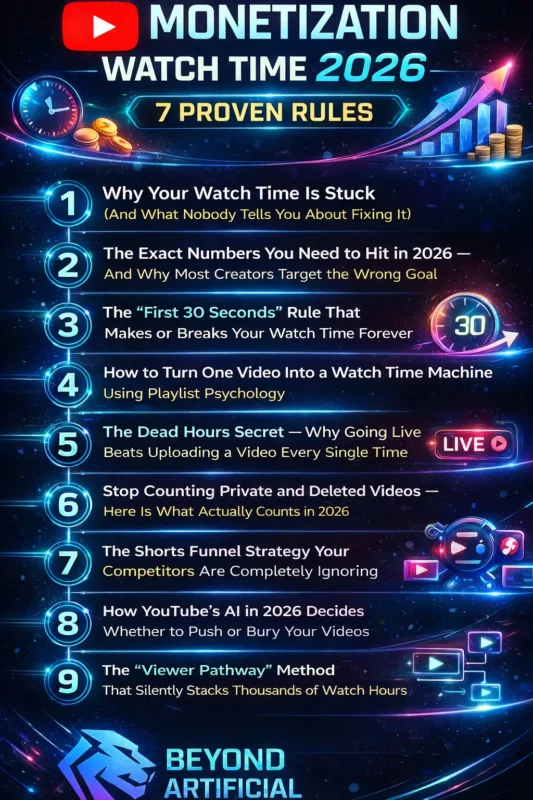
Before trying to grow your watch time, you first need to clearly understand what YouTube actually requires for monetization. In 2026, most creators still need to reach 4,000 public watch hours within the last 12 months, along with 1,000 subscribers, to qualify for the YouTube Partner Program. Many creators fail not because their content is bad, but because they misunderstand how watch time actually works.
Only public watch hours from normal videos and live streams count toward monetization. Watch time from ads, private videos, or deleted content does not count. This is why your first step should always be to focus on content that keeps viewers watching longer. The more time people spend on your videos, the faster you move toward monetization. According to the officialYouTube monetization requirements creators need 1,000 subscribers and 4,000 public watch hours within the last 12 months to join the YouTube Partner Program.
Once you understand the rule clearly, you can start applying the strategies that actually increase watch time and grow your channel faster.
1. Why Your Watch Time Is Stuck (And What Nobody Tells You About Fixing It).
You keep uploading videos, checking your analytics again and again, but your watch time still does not grow. This can feel really frustrating for many creators. One common mistake is focusing only on views instead of viewer retention. People might click your video, but if they leave within the first 20–30 seconds, your watch time will stay low, and YouTube may stop recommending your videos.
In many cases, the problem is not the content itself; it is the way the video starts and flows. Start your video with a strong hook in the first 15 seconds that makes viewers curious and gives them a reason to keep watching. Tell them clearly what they will learn or gain by watching the full video. You can also keep viewers engaged by adding small pattern interrupts every 60–90 seconds. This could be a question, a surprising fact, or a quick visual change that grabs attention again.
Remember, one video with strong retention can be more powerful than many videos that people leave quickly. When viewers stay longer on your videos, your watch time naturally starts growing. You can track your watch time progress usingYouTube Analytics which shows your public watch hours and audience behavior.
Low watch time kills growth. Our YouTube automation services focus on retention strategies that keep viewers watching longer.
2. The Exact Numbers You Need to Hit in 2026 (and why most creators target the wrong goal)
Many YouTube creators work very hard but still struggle to reach monetization. One big reason is that they focus on the wrong numbers. In 2026, the main requirement for full YouTube monetization is 1,000 subscribers and 4,000 public watch hours within the last 12 months. However, many creators spend too much time worrying about total views or how many videos they upload instead of focusing on these two key goals.
YouTube also offers a lower monetization tier that starts at 500 subscribers and 3,000 watch hours. This level allows features like fan funding, but it does not include ad revenue. Because of this, many creators think they have reached full monetization when they actually have not. A helpful step is to open your YouTube Analytics and check how many watch hours you have gained in the last 12 months.
Older watch hours no longer count toward the monetization requirement, which many creators do not realize. A helpful step is to open your YouTube Analytics and check how many watch hours you have gained in the last 12 months. Older watch hours no longer count toward the monetization requirement, which many creators do not realize. It is also important to focus on public long-form videos, because watch time from private, unlisted, or deleted videos does not count toward your 4,000-hour goal.
You can make this goal easier by setting a weekly watch-time target. Divide the remaining watch hours you need by the number of weeks left in your 12-month period. This turns monetization from a vague goal into a clear plan.
Reaching monetization is not only about talent. Often, creators simply need a clear understanding of the numbers and the right strategy to reach them.
3. The “First 30 Seconds” Rule That Makes or Breaks Your Watch Time Forever.
Every time someone clicks on your video, the first 30 seconds decide what will happen next. If the viewer feels interested right away, they stay. If not, they leave quickly. Many creators lose watch time because they start their videos with long intros, slow music, or channel announcements. While this might seem normal, viewers often lose interest during these opening moments.
The first 30 seconds should not feel like a slow introduction. Instead, they should show viewers why the video is worth watching. One effective strategy is to start with something that grabs attention immediately. This could be a surprising fact, a bold statement, or a question that makes viewers curious about the answer. For example, instead of saying “Hey guys, welcome back to my channel,” you could begin with something more engaging that connects directly to the topic of the video.
It also helps to plan your first 30 seconds carefully before recording. Think about what will make viewers interested enough to keep watching. When your opening is strong, viewers stay longer on your videos. And when people watch longer, your average view duration and watch time naturally grow.
4. How to Turn One Video Into a Watch Time Machine Using Playlist Psychology.
Imagine someone clicking on one of your videos and then continuing to watch several more videos from your channel without stopping. This is exactly what playlists can help you achieve. Many creators upload videos without organizing them. But when your videos are arranged inside a well-structured playlist, viewers are more likely to continue watching the next video automatically. This can greatly increase your total watch time.
A smart way to build a playlist is to organize it like a story or learning path. Start with beginner topics, move to helpful tips, and end with more advanced strategies. This makes viewers feel like each video naturally leads to the next one. You can also encourage viewers to continue watching by mentioning the next video at the end of your current video. For example, you might say that the next video explains the next step or a deeper strategy.
Another helpful tip is to give your playlists interesting and curiosity-driven titles. Instead of using a simple name like “YouTube Tips,” try something more engaging, such as “How to Grow From Zero to Monetized on YouTube.” When your videos are connected through playlists, viewers often watch multiple videos in a row.
This simple strategy can turn your existing content into a powerful way to increase watch time and grow your channel.
5. The Dead Hours Secret (why going live beats uploading a video every single time)
Many creators spend several days planning, recording, and editing one video. But sometimes a two-hour live stream can generate the same amount of watch time in a much shorter period. That is why live streaming has become a powerful strategy for growing watch hours in 2026. When you go live, every minute viewers spend watching your stream adds directly to your public watch hours for monetization.
One reason some creators reach monetization faster is that they regularly use live streams to build watch time quickly. To make live streaming more effective, try scheduling your streams when your audience is most active. You can find this information in YouTube Analytics under “When your viewers are on YouTube.” Streaming during these peak hours can bring more viewers and increase total watch time.
It is also helpful to give your live stream a clear and interesting title. Instead of simply writing “Live Stream,” choose a title that explains what viewers will gain, such as answering questions or solving a specific problem. After the live stream ends, keep the replay public. Many viewers watch streams later, and those views continue adding watch hours even after the stream is finished.
Live streaming does not require expensive equipment or a huge audience. With the right timing and topic, it can become a simple way to increase watch time and move closer to YouTube monetization.
6. Stop Counting Private and Deleted Videos (here is what actually counts in 2026)
Many YouTube creators make one very common mistake when tracking their watch hours. They count watch time from private, unlisted, or deleted videos, thinking it helps them reach the monetization requirement.
But in 2026, YouTube only counts watch hours from public long-form videos that have stayed public within the last 12 months. Watch time from private, unlisted, or deleted videos does not count toward your 4,000-hour monetization goal.
Because of this, some creators think they are closer to monetization than they actually are. A good step is to open your YouTube Studio and review your videos. Check which videos are public and which ones are private or unlisted. In some cases, making a useful video public again can help you gain watch hours from new viewers. It is also important to avoid deleting videos out of frustration. When a video is deleted, all of the watch time it earned disappears permanently.
For the most accurate numbers, always check your analytics for public watch hours. This will give you a clear and honest picture of your progress toward monetization. Every public video on your channel can continue bringing watch hours over time. So instead of removing content quickly, think carefully and allow your existing videos to keep working for your channel.
7. The Shorts Funnel Strategy Your Competitors Are Completely Ignoring.
Many creators use YouTube Shorts only to get quick views. But Shorts can actually be a powerful way to bring viewers to your long-form videos and increase your total watch time. The mistake most creators make is treating Shorts and long videos as two separate things. They upload Shorts for views and long videos for watch time, but they do not connect them together.
A smarter approach is to use Shorts as a preview or teaser for your longer videos. For example, you can share a short clip from a bigger topic and leave viewers curious about the full explanation. When people feel that they only saw part of the story, they are more likely to click your long-form video to see the complete answer. One helpful tip is to end your Short with a small cliffhanger or question. Then place a link to your long video in the description or pinned comment so viewers can easily continue watching.
It is also important to keep your channel page organized. When someone enjoys your Short and visits your channel, they should quickly find related long-form videos that continue the topic. When used this way, Shorts can become a simple funnel that brings new viewers to your longer videos and helps increase your overall watch time and channel growth.
8. How YouTube’s AI in 2026 Decides Whether to Push or Bury Your Videos.
When you upload a video, YouTube’s system quickly starts analyzing how viewers respond to it. Based on these signals, the platform decides whether your video should be recommended to more people or shown less often. In 2026, YouTube’s AI looks at several important factors. These include your watch time, viewer retention, likes, comments, and overall engagement. It also notices how viewers behave, such as whether they rewatch parts of the video or leave quickly.
The first 24–48 hours after publishing are especially important. During this time, YouTube checks how viewers react to your video. If people watch longer and interact with it, the platform is more likely to recommend it to a larger audience. One helpful strategy is to share your video with your most engaged viewers soon after publishing. This could include your community, friends, or followers who regularly support your content. Early engagement can help show YouTube that your video is valuable.
It is also useful to write a clear description with relevant keywords. This helps YouTube understand what your video is about and recommend it to the right viewers. After publishing, try to stay active on your channel for a while. Replying to comments and interacting with viewers during the first few hours can encourage more engagement and help your video perform better.
Understanding YouTube’s AI is not about tricking the system. It is about creating content that viewers enjoy and engaging with your audience so that your videos naturally reach more people.
9. The “Viewer Pathway” Method That Silently Stacks Thousands of Watch Hours While You Sleep.
Imagine your YouTube channel continuing to gain watch hours even while you are asleep. This can happen when your videos are connected in a way that encourages viewers to keep watching more content from your channel. This idea is called the Viewer Pathway Method. Instead of treating every video as a separate piece of content, you design your channel so that each video naturally leads to the next one.
Many creators upload videos without linking them together. When a video ends, and there is no clear next step, viewers often leave the channel. This means lost watch time. One helpful strategy is to recommend another relevant video during your content, especially when viewers are still engaged. For example, around the middle of the video, you can mention another video that explains the next step or gives more details.
You should also use YouTube end screens in the final seconds of your video. Add one or two related videos that continue the topic the viewer just watched. When the next video feels like a natural continuation, viewers are more likely to keep watching. Another useful idea is to create a “Start Here” playlist on your channel homepage. This helps new visitors understand where to begin and guides them through your best content step by step.
You may not always need more videos to increase watch time. Sometimes the key is simply connecting the videos you already have, so viewers move smoothly from one video to the next and spend more time on your channel.
FREQUENTLY ASKED QUESTIONS (FAQs)
What are the rules for monetization on YouTube in 2026?
In 2026, to qualify for full YouTube monetization, you need 1,000 subscribers and 4,000 public watch hours within the last 12 months. Both requirements must be completed before you can join the YouTube Partner Program. It is also important to know that only watch hours from public long-form videos count. Watch time from private, unlisted, or deleted videos does not count toward the 4,000-hour requirement. To reach monetization faster, focus on consistent uploads, helpful content, and increasing viewer watch time. Once you meet the requirements, YouTube will review your channel before approving monetization.
How many watch time hours to monetize YouTube?
To get full YouTube monetization in 2026, you need 4,000 public watch hours in the last 12 months and 1,000 subscribers. When you reach both of these requirements, you can apply for the YouTube Partner Program and start earning from ads.
YouTube also has a lower level at 500 subscribers and 3,000 watch hours, but this only unlocks features like fan funding; it does not include ad revenue. The best step is to check your YouTube Analytics to see how many public watch hours you currently have and focus on growing that number with your videos, live streams, and playlists.
How to reach 4000 watch hours on YouTube fast?
Focus on strategies that increase viewer watch time. Go live to collect watch hours in real time, create playlists so viewers watch multiple videos, and start your videos with a strong hook to keep people watching longer. These simple steps can help grow your watch hours faster.
What if I get 4000 watch hours after 12 months?
YouTube only counts public watch hours from the last 12 months. If some of your watch hours are older than 12 months, they will no longer count toward monetization. That is why it is important to keep uploading and growing your watch time consistently so you can reach 4,000 hours within the active 12-month period.
Can I monetize YouTube in 1 month?
Monetizing YouTube in 1 month is very difficult, but it can happen if your videos get strong views and watch time quickly. To reach the goal faster, focus on high-retention videos, live streams, and consistent uploads that increase both subscribers and watch hours.
YouTube Monetization Watch Time 2026 Free
Many creators spend months uploading videos and checking their analytics, only to see their watch time grow very slowly. This can feel frustrating, especially when you are working hard but still far from the 4,000-hour monetization goal.
The good news is that reaching YouTube monetization watch time in 2026 does not require expensive tools or paid promotions. With the right approach, you can increase watch hours using completely free strategies that every creator can use. Here are some simple ways to grow your watch time without spending money:
1. Improve your older public videos by updating titles and thumbnails so they start attracting viewers again.
2. Go live using your phone or computer and collect watch hours in real time without spending hours editing.
3. Create playlists so viewers naturally watch multiple videos from your channel in one session.
4. Use YouTube Analytics to find your best-performing videos and create more content around similar topics.
5. Use YouTube Shorts as a way to bring new viewers to your long-form videos.
You do not need a big budget to reach your 4,000 watch hours. By using thetop AI tools and staying consistent with your content, you can gradually grow your watch time and move closer to monetization.