
 YouTube Automation
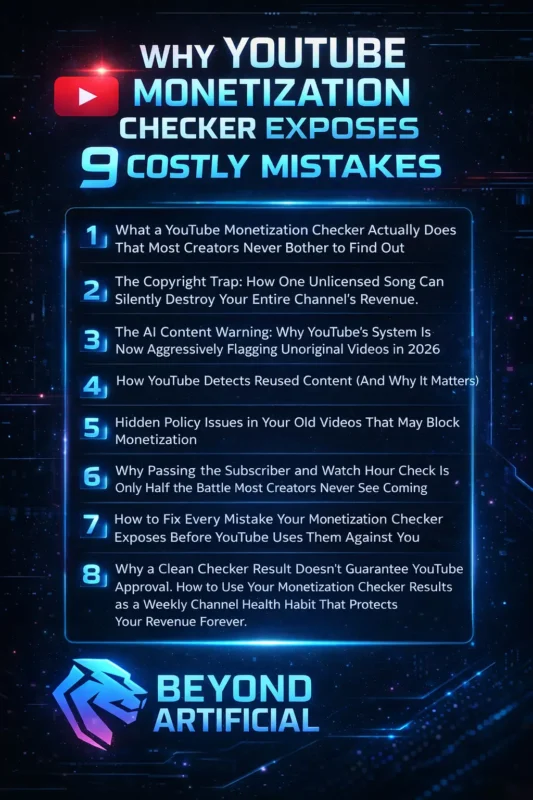
Why YouTube Monetization Checker Exposes -9 Costly Mistakes(Blog#:43)

Every creator who has ever entered their channel link into a YouTube Monetization Checker knows the sinking feeling of seeing that they still do not qualify. After months of uploading videos and trying to grow, it can feel frustrating to realize you are not there yet. But the YouTube Monetization Checker exposes does more than just show a pass or fail result. It helps reveal the hidden problems that may be slowing down your channel without you even noticing.
Many creators think they are doing everything right, but small mistakes can quietly hold back their progress. What surprises most people is that these issues are often very common. In fact, many creators make the same nine costly mistakes while working hard to grow their channel. The good news is that once you understand what these mistakes are, they are usually much easier to fix than you might think.
If you can identify these problems and take the right steps to correct them, your path to monetization becomes much clearer. The key is knowing exactly what to look for and what to improve.
Before using a YouTube monetization checker, you should first understand the full YouTube monetization watch time requirements.
In the sections ahead, we will break down the nine mistakes the YouTube Monetization Checker often exposes, and how you can fix them so your channel moves closer to monetization. Applying, make sure your channel follows the official YouTube Partner Program policies to avoid rejection during the manual review.
1. What a YouTube Monetization Checker Actually Does That Most Creators Never Bother to Find Out.
Many creators think aYouTube monetization checker only shows whether they have reached 1,000 subscribers and 4,000 watch hours. But in reality, these tools can do much more than that. A good monetization checker can help review your channel and highlight possible problems before you apply for monetization. For example, it may point out issues like copyright risks, reused content, advertiser-unfriendly material, or community guideline concerns.
This is helpful because when you apply for monetization, YouTube reviewers check your entire channel, not just your newest videos. That is why it is a good idea to run a full check on your channel before submitting your monetization application. It can help you identify problems early and fix them in time.
Also, remember to review older videos on your channel. Sometimes, policy issues can exist in videos uploaded months or even years ago, and they can still affect your monetization review. Instead of seeing checker results as bad news, treat them as a helpful guide. They show you what needs to be improved so your channel has a better chance of being approved for monetization.
2. The Copyright Trap: How One Unlicensed Song Can Silently Destroy Your Entire Channel’s Revenue.
Many creators work hard for months to grow their channel and reach the requirements for monetization. But sometimes a small mistake, like using an unlicensed song in a video, can create problems during the monetization review. Even a short music clip that is not properly licensed can lead to copyright claims. In some cases, the copyright owner may claim the revenue from that video or restrict where the video can be viewed.
This is why it is important to check your channel for copyright issues before applying for monetization. You can do this by opening YouTube Studio and looking at the Content tab, where copyright claims are shown for each video. If you find any claims, consider replacing the background music with tracks from the YouTube Audio Library or other properly licensed music platforms. It is also a good idea to review older videos on your channel, since copyright claims can appear even in videos uploaded a long time ago.
Taking time to fix these issues can help protect your content and give your channel a better chance of being approved for YouTube monetization.
3. The AI Content Warning: Why YouTube’s System Is Now Aggressively Flagging Unoriginal Videos in 2026.
In 2026, YouTube’s system has become much better at detecting unoriginal or repetitive content. This means videos that are copied, reused, or heavily automated can now be flagged more easily than before. YouTube wants creators to publish original content that adds real value. Videos that simply reuse other people’s work, create compilations without meaningful commentary, or rely completely on automated content may face problems during monetization review.
This does not mean AI tools cannot be used. Many creators still use them for ideas, editing, or research. However, it is important to add your own voice, opinion, and perspective so the content feels unique and helpful. For example, you can include your own explanation, commentary, or personal insights instead of only presenting information that already exists online.
A good approach is to use AI as a support tool, not as the main creator of your content. When you combine tools with your own creativity and experience, your videos are more likely to be seen as original. Focusing on authentic, useful, and original content will always give your channel a better chance of growing and getting approved for YouTube monetization.
4. How YouTube Detects Reused Content (And Why It Matters).
If your channel uses clips from other creators, reposted videos, or compilation content without adding meaningful original value, it may face problems during the monetization review. YouTube uses advanced systems that can compare audio and video patterns to detect reused content. Even if a video is edited, sped up, or has filters added, the system may still recognize the original material.
Because of this, channels that mainly reuse existing content without adding enough originality may struggle to get approved for monetization. A good step is to review the videos on your channel and ask yourself whether each video includes your own commentary, analysis, or unique perspective. Videos that add real value and explanation are more likely to meet YouTube’s content guidelines.
If you reference other content, try to include your personal insights, reactions, or educational breakdowns so the video becomes something new and helpful rather than simply reposted material. Building your channel around original ideas, creativity, and meaningful value for viewers is the safest and most effective way to grow and qualify for YouTube monetization.
5. Hidden Policy Issues in Your Old Videos That May Block Monetization.
Sometimes the reason a channel is not approved for monetization is not in the newest videos, but in older content uploaded months or even years ago. When you apply for monetization, YouTube reviewers look at your entire channel, not just your recent uploads. This means an old video with issues like misleading thumbnails, sensitive topics, excessive profanity, or policy violations can affect your approval.
Many creators reach 1,000 subscribers and 4,000 watch hours, apply for monetization with confidence, and then get rejected because of something hidden in an old video they had forgotten about. A good step is to do a full channel review. Go through your older videos and check if anything might not follow YouTube’s current policies. This includes titles, thumbnails, descriptions, and the actual video content.
It is also important to remember that YouTube uses current policies when reviewing channels, even for videos uploaded a long time ago. Your older videos are still part of your channel’s history. Keeping them clean and compliant can help improve your chances of getting approved for YouTube monetization.
6. Why Passing the Subscriber and Watch Hour Check Is Only Half the Battle Most Creators Never See Coming.
Many creators feel excited when they finally reach 1,000 subscribers and 4,000 watch hours. It feels like the hardest part is done. But in reality, this is only the first step toward monetization. After you apply, YouTube does a manual review of your entire channel. A real reviewer checks your content to see if it follows YouTube’s policies and if the channel provides original, valuable content for viewers.
During this review, YouTube looks at more than just numbers. They also check content quality, originality, community guideline compliance, and overall channel consistency. Because of this, some creators meet the watch hour and subscriber requirements but still get rejected for monetization. Before applying, it can help to review YouTube Partner Program policies and make sure your channel follows them. You should also try to keep a clear niche and consistent content style so your channel looks focused and professional.
It is also a good idea to spend some time reviewing your videos, fixing any policy issues, and improving your channel before submitting the application. Reaching the requirements opens the door, but quality content and a clean channel are what help you get approved for YouTube monetization.
7. How to Fix Every Mistake Your Monetization Checker Exposes Before YouTube Uses Them Against You.
When a YouTube monetization checker shows issues on your channel, it can feel discouraging. But these results are actually helpful because they show you what needs to be fixed before applying for monetization. Think of the checker as a guide. It can point out problems such as copyright claims, policy violations, advertiser-unfriendly content, or originality issues in your videos.
The good news is that most of these problems can be fixed before you submit your monetization application. Since YouTube reviews your channel based on how it looks at the time you apply, every improvement you make can increase your chances of approval.
1. A helpful approach is to fix issues in this order:
2. Resolve copyright claims on your videos.
3. Remove or correct policy violations.
4. Improve advertiser-friendly content.
5. Add more originality or commentary if needed.
6. It can also help to keep a simple list of the changes you make so you do not miss any flagged videos.
Instead of rushing your monetization application right after reaching the requirements, take some time to review and clean up your channel. Fixing these issues first can give your channel a much better chance of being approved for YouTube monetization.
8. Why a Clean Checker Result Does not Guarantee YouTube Approval.
Many creators feel confident after running a YouTube monetization checker and seeing no issues. But sometimes, even with a clean result, their monetization application still gets rejected. This happens because a checker tool only looks for basic technical problems, such as copyright claims or policy violations. When you apply for monetization, YouTube also performs a manual review of your entire channel.
During this review, a real person may look at your content quality, originality, niche focus, and overall channel presentation. They want to see if the channel provides real value to viewers and follows YouTube’s guidelines. Before applying, it is helpful to review your channel from a viewer’s perspective. Make sure your content feels useful, original, and consistent.
It can also help to improve your channel’s appearance, including your description, playlists, branding, and About section. A clear and professional channel layout creates a strong first impression during the review. A clean checker result is a good sign, but it is only the first step. To increase your chances of approval, focus on building a channel that looks professional, original, and valuable for viewers.
9. How to Use Your Monetization Checker Results as a Weekly Channel Health Habit That Protects Your Revenue Forever.
Many creators only use a monetization checker when they are about to apply for monetization. But it can actually be helpful to check your channel regularly to make sure everything stays safe and compliant. Think of a monetization checker as a channel health tool. It can help you notice issues such as copyright claims, policy concerns, or advertiser-unfriendly content before they become serious problems.
A good habit is to review your channel once a week. You can open your monetization checker, check your YouTube Studio for copyright claims, and quickly review your latest videos to make sure there are no policy warnings. You can even create a simple checklist, such as:
Check for new copyright claims on recent videos
Review the community guidelines or policy warnings
Make sure your titles, thumbnails, and descriptions follow guidelines
Confirm your channel still follows YouTube Partner Program policies
Checking these things regularly helps you catch problems early and fix them quickly.
Monetization is not just something you reach once and forget. Taking a little time each week to review your channel can help protect your content, your revenue, and your long-term channel growth.
FREQUENTLY ASKED QUESTIONS (FAQs)
What are common YouTube monetization mistakes?
Common monetization mistakes include using unlicensed music, uploading reused or low-originality content, ignoring policy issues in old videos, and counting watch hours from private or deleted videos. Before applying, review your channel, check for copyright claims and policy issues, and make sure your videos provide original and valuable content. Fixing these problems early can improve your chances of getting approved for YouTube monetization.
Is it necessary to show your face on YouTube for monetization?
No, showing your face is not required for YouTube monetization. Many successful channels use voiceovers, screen recordings, tutorials, or animations without appearing on camera. The most important thing is that your videos are original, useful, and provide real value to viewers.
Does YouTube reject monetization?
Yes, YouTube can reject monetization applications. This usually happens if a channel has reused content, copyright issues, policy violations, or low-quality or unclear content. To improve your chances, review your channel carefully, fix any problems, and make sure your videos are original, helpful, and follow YouTube’s guidelines before applying.
Does YouTube delete fake views?
Yes, YouTube removes fake or bot views automatically. If the system detects views from bots, purchased traffic, or suspicious activity, those views will not count and may be removed. To stay safe, focus on getting real views from genuine viewers, because only authentic watch time helps your channel grow and qualify for monetization.
Is the YouTube copyright checker accurate?
Yes, YouTube’s Content ID system is very accurate and can quickly detect copyrighted music, video clips, or other protected content in uploaded videos. However, mistakes can sometimes happen. If you receive a claim that you believe is incorrect, you can submit a dispute and provide proof that you have the right to use the content.
YouTube channel Motivation check
Many creators open their YouTube Studio dashboard and wonder why their channel is still not monetized. This can feel confusing, especially when you are not sure what might be causing the problem. A YouTube channel monetization check can help you understand where your channel currently stands and what might be stopping your approval. It shows the areas you need to review and improve before applying for monetization.
A proper monetization check can help you:
Find copyright claims in older videos that could affect your application
Identify possible policy issues in your channel history
Check your current watch hours and subscriber progress toward monetization
Spot advertiser-friendliness problems in your content
Monitor your channel’s overall compliance and health
When you understand what your monetization check reveals, it becomes much easier to fix issues and prepare your channel for YouTube monetization approval.