
 YouTube Automation
Why surface i7 vs x elite for video editing matters–9 Truths(Blog#:28)

Choosing between Why Surface i7 vs X Elite for video editing matters can either save your creative career or silently kill your workflow. Every second your timeline lags, every crash that eats your unsaved project, and every render that drags for hours, that pain is real, and it matters more than most people admit.
Understanding why Surface i7 vs X Elite for video editing differs so deeply means understanding why some editors finish their best work by midnight while others burn out by noon. Most creators pick the wrong chip and spend months blaming themselves for slow performance, when the truth is, the machine was never built for their dreams.
If you want to edit faster, think clearer, and finally stop fighting your own laptop, these truths will change everything you thought you knew. Stop letting the wrong processor slow you down and make video editing harder than it should be. A slow system can waste your time, delay your projects, and make your creative work feel stressful instead of exciting.
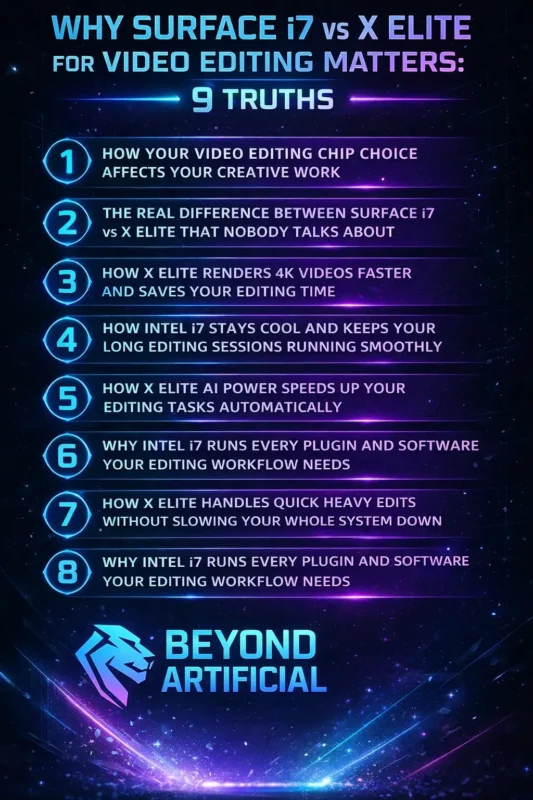
Every day with the wrong device means longer renders, missed deadlines, and more frustration. But choosing the right processor can make editing faster, smoother, and more enjoyable. Keep reading for these 9 truths to understand what your video editing setup really needs and give your work the performance it deserves.
1. How Your Video Editing Chip Choice Affects Your Creative Work
Your video editing chip is more important than most people realize. It controls how smoothly your software runs, how fast your videos render, and how stable your system feels during long editing sessions. When you choose the wrong processor, editing can become slow, frustrating, and stressful. Timelines start lagging, previews freeze, and crashes can ruin hours of hard work. The processor inside your Surface plays a big role in whether your 4K footage runs smoothly or constantly stutters.
That is why it is important to match the chip to the type of editing you actually do. If you mostly create short videos like YouTube Shorts, Reels, or TikTok content, and you care about long battery life and quiet performance, the Snapdragon X Elite can handle light to moderate editing very well. It is fast, efficient, and great for creators who work on the go. But if you use heavy plugins, edit large 4K projects, do serious color grading in DaVinci Resolve, or spend 4 to 6 hours editing at a time, an Intel i7 is usually the safer and more stable choice. It offers strong compatibility with professional editing software and handles demanding tasks more reliably.
Do not choose a Surface just because it is cheaper or newer. Always think about the software you use most and the type of projects you edit. If possible, test your main editing app on both processors before deciding. Compatibility and stability matter just as much as speed. The right processor will not only make your editing faster, but it will reduce frustration, protect your time, and give your creative work the smooth performance it truly needs.
2. The Real Difference Between Surface i7 vs X Elite That Nobody Talks About
Many people compare Surface i7 vs X Elite by only looking at speed and price, but the real difference is deeper than simple numbers. The Snapdragon X Elite uses ARM architecture, while the Intel i7 uses a more traditional system that most editing software has been built for over many years. This means both processors work in different ways and can give very different editing experiences. Intel i7 works smoothly with almost all popular editing apps, plugins, and tools because most software is designed to run perfectly on this type of processor.
On the other hand, the X Elite sometimes needs apps to adjust or “translate” before running properly. When an app is fully optimized for it, the performance can be very fast and efficient. But when it is not fully supported, you may face slow performance, missing features, or occasional compatibility issues. That is why it is always important to check whether your main editing software supports ARM processors before choosing the X Elite. Many modern apps like Premiere Pro, CapCut, and other popular tools are improving their support and can work well on X Elite, giving you fast performance and long battery life.
This makes it a great option for creators who edit lighter content, travel often, or want a quiet and power-efficient device. However, if your editing workflow depends on special plugins, older software versions, or advanced color grading tools, Intel i7 is often the safer choice. It offers better compatibility and stability for long editing sessions and professional projects. You are less likely to face crashes, errors, or software limitations, which can save you a lot of time and frustration.
In the end, the best processor is not just the one that looks fastest on paper. The best choice is the one that runs your specific editing software smoothly, supports your workflow without problems, and helps you create without constant technical issues. When your processor matches your editing needs, your work becomes easier, faster, and much more enjoyable.
3. How X Elite Renders 4K Videos Faster and Saves Your Editing Time.
If you have ever waited for a video to render and felt like it was taking forever, the Snapdragon X Elite is designed to make that process much faster and smoother. Long rendering times can slow down your workflow and make editing feel tiring, especially when you are working on multiple projects or tight deadlines. With a faster processor, tasks that once took a long time can finish much more quickly, helping you stay productive and focused. The X Elite is built to handle heavy video files efficiently.
It uses modern technology like a powerful NPU (AI engine) and unified memory to process video, effects, and graphics together in a smooth way. This helps reduce delays and keeps your editing software running steadily during exports. Many creators notice that 4K videos can render faster compared to older processors, which means less waiting and more time for creativity. To get the best performance from the X Elite, it is important to use the right settings. Exporting videos in common formats like H.264 or HEVC usually works well because these formats are optimized for modern processors and help speed up rendering.
Keeping your project files on fast SSD or NVMe storage can also improve performance, as the processor can access your footage quickly without delays. If you regularly edit short videos like YouTube content, Instagram Reels, or client highlight videos, the X Elite can handle these tasks efficiently when your system is set up properly. Try to close unnecessary background apps while rendering so your processor can focus fully on your editing work. Too many open programs can slow down even a powerful system.
A faster rendering process does not just save time; it also makes editing more enjoyable. When your system works smoothly, you can focus on creativity instead of waiting for progress bars. Choosing a processor that supports your editing style helps you finish projects faster, stay consistent with deadlines, and enjoy the creative process without unnecessary stress.
4. How Intel i7 Stays Cool and Keeps Your Long Editing Sessions Running Smoothly.
Many video editors know the frustration of a laptop getting hot during long editing sessions. When your system heats up too much, it can slow down, lag, or even crash at the worst possible moment. This not only affects your device but also your creative flow and productivity. A stable and cool system makes a huge difference when you are working on tight deadlines or complex projects.
Intel i7 processors are known for offering stable performance and good thermal management during heavy tasks like video editing. When you work on long timelines, add multiple effects, or render large 4K files, the i7 is designed to keep performance steady without slowing down too quickly. A cooler and more stable processor helps your editing software run smoothly and reduces the chances of sudden performance drops.
To keep your laptop running cool, always place it on a hard, flat surface like a desk or table. Soft surfaces such as beds, cushions, or sofas can block airflow and cause heat to build up faster. Good airflow allows the cooling system inside the laptop to work properly and keeps your processor performing at its best. If you often edit for several hours at a time, it also helps to close unused browser tabs and background apps. Extra programs use system resources and can increase heat, making your laptop work harder than necessary. Giving your processor full focus on editing tasks helps maintain both speed and stability.
For long editing sessions, especially those lasting more than 3 to 4 hours, using a simple cooling pad can provide extra airflow and keep temperatures lower. This small step can improve performance and help protect your laptop over time. A well-cooled processor does more than just stay comfortable; it keeps your editing smooth, prevents slowdowns, and helps you work confidently without worrying about crashes or overheating.
5. How X Elite AI Power Speeds Up Your Editing Tasks Automatically.
Imagine finishing your editing work in minutes instead of spending hours waiting for tasks to complete. That is the kind of experience the Snapdragon X Elite is designed to provide. It includes a powerful built-in AI engine that quietly works in the background and helps handle many time-consuming editing tasks automatically. This can make your editing process faster, smoother, and much less stressful. The X Elite’s AI power can assist with features like noise reduction, auto color correction, background removal, smart scene detection, and other automated editing tools.
Instead of doing everything manually, your editing software can use AI to speed up these steps while you focus on creative decisions. This helps your workflow feel more efficient and less exhausting, especially when you are working on multiple projects. To get the most from this processor, it is helpful to turn on AI-assisted features inside your editing apps. Many programs now include smart tools that automatically adjust colors, frame shots for different platforms, or improve audio and video quality.
When these features are enabled, the X Elite can process them quickly and smoothly, saving you time on repetitive work. If you regularly create social media videos, YouTube content, client projects, or quick turnaround edits, using AI tools can make a big difference. Let the processor handle routine adjustments first so you can focus on storytelling, design, and creative improvements. This not only speeds up your workflow but also reduces mental fatigue during long editing sessions.
It is also worth spending a little time learning the AI features in your editing software. Even 20 to 30 minutes of practice can save hours of manual editing every week. Over time, these short-term savings add up and make your work much more efficient.
The AI power of the Snapdragon X Elite is not just a technical feature. It is a practical advantage that can help you work faster, stay organized, and enjoy editing without constant delays. With the right setup and tools, your editing process becomes smoother, more creative, and far less tiring than before.
6. Why Intel i7 Runs Every Plugin and Software Your Editing Workflow Needs.
There is nothing more frustrating than buying a new and expensive laptop for editing, starting an important project, and then discovering that your main plugin or software does not work properly. This situation can waste time, delay your work, and create unnecessary stress. That is why software compatibility is one of the most important things to think about before choosing a processor for video editing. Intel i7 processors use the traditional x86 architecture that most Windows editing software has been built for over many years.
Because of this, almost all editing apps, plugins, and third-party tools work smoothly on Intel i7 without extra setup. Programs open quickly, features work properly, and you are less likely to face errors or missing tools during your editing sessions. This makes the Intel i7 a very safe and reliable choice for professional editors who depend on multiple apps and plugins every day. The Snapdragon X Elite uses ARM architecture, which is newer and still being optimized by many software developers. While many popular editing apps are improving their support for ARM, some tools still need to run through a translation system to work.
This can sometimes lead to slower performance, missing features, or occasional compatibility problems. These issues may not appear immediately, but can show up when you start using specific plugins or advanced features. Before choosing your Surface processor, it is a good idea to make a list of the software and plugins you use most. If your workflow includes professional tools like DaVinci Resolve with extra plugins, advanced audio editing software, or older programs that have not been updated recently, the Intel i7 will usually run them more smoothly and reliably.
You can work without worrying about whether a tool will open or function correctly. Never assume that every program will work perfectly on every processor. Even well-known editing software can sometimes have limitations on newer platforms. Testing your main apps in advance or checking compatibility information can help you avoid problems later. In the end, software compatibility is not just a technical detail. It is the foundation of a smooth editing experience.
When your processor supports all your tools without issues, you can focus fully on creativity, meet deadlines with confidence, and complete your projects without unexpected interruptions.
7. How X Elite Handles Quick Heavy Edits Without Slowing Your Whole System Down.
Every editor has experienced the moment when a project becomes too heavy, and the system starts slowing down. The timeline begins to lag, clips freeze while scrubbing, and simple actions take longer than they should. When this happens, it breaks your creative flow and makes editing feel frustrating instead of enjoyable. The Snapdragon X Elite is designed to reduce these problems by using unified memory architecture. This means the processor, graphics system, and AI engine all share the same fast memory.
Because everything works together in one shared pool, the system can handle multiple tasks at the same time more smoothly. When you are editing 4K footage, adding color grades, or working with several video layers, this shared memory helps prevent sudden slowdowns. For short, high-intensity editing sessions, such as trimming many 4K clips quickly, applying color corrections, or adding visual effects, the X Elite can respond very fast. It is built to handle bursts of heavy activity without struggling. This makes it useful for creators who often edit in focused sessions and want quick results.
To get the best performance, it helps to organize your timeline before starting serious edits. Remove unused clips, label your tracks, and keep everything structured. A clean timeline allows the processor to work more efficiently and reduces unnecessary memory use. If you work on multi-layer 4K projects, using proxy files is also a smart habit. Proxy files are lower-resolution versions of your footage that make editing smoother. You can switch back to full resolution when exporting the final video. This approach keeps your system fast and prevents overload during the editing process.
It is also better to apply heavy visual effects gradually instead of stacking too many at once. Adding effects step by step allows the processor to manage resources more efficiently and keeps the playback smooth. In the end, the Snapdragon X Elite is built to handle demanding editing tasks with better coordination between components. When used correctly, it can maintain smooth performance, protect your workflow, and help you stay focused on creativity instead of worrying about system slowdowns.
8. Why Intel i7 Runs Every Plugin and Software Your Editing Workflow Needs.
Nothing is more frustrating for a video editor than opening an important project and seeing a plugin crash or refuse to load. When your tools do not work properly, it slows down your workflow and affects your confidence. This is why software compatibility is so important when choosing the right processor for editing. Intel i7 is known for its strong compatibility with almost all Windows editing software and plugins. Because it uses the traditional x86 system, most professional editing apps are designed to run perfectly on it.
Whether you use DaVinci Resolve for color grading, After Effects for motion graphics, advanced audio tools, or older editing software, an Intel i7 usually runs them smoothly without errors or missing features. Before choosing any processor, it is smart to make a list of the software and plugins you use the most. Then check if they fully support the processor you plan to buy. This simple step can save you from future problems and help you avoid wasting time on troubleshooting.
If you work with clients and need reliable performance every day, Intel i7 is often the safer option. Client projects require stability, and there is little room for software issues or unexpected crashes. A stable system helps you meet deadlines and deliver professional results without stress. Choosing a compatible processor does more than just run your software. It gives you peace of mind and allows you to focus completely on your creativity.
When your tools work smoothly and reliably, editing becomes faster, easier, and much more enjoyable.
9. How to Pick Between i7 and X Elite Based on Your Own Editing Style and Needs.
Many editors make the mistake of choosing a processor just because others recommend it, without thinking about their own editing style and daily needs. But the right processor is not simply the one with better specs on paper; it is the one that fits your workflow, software, and working habits. Choosing between Intel i7 and Snapdragon X Elite depends on how you actually edit every day. If you often work on the go, edit in different locations, create short social media videos, and want long battery life without always carrying a charger, the X Elite can be a great fit.
It is designed for mobility, efficiency, and quick editing tasks, making it useful for creators who value portability and speed. A helpful step is to think about your normal editing routine. What software do you open first? How long are your editing sessions? Which plugins or tools do you use most? Do you edit at a desk for hours or move around while working? Answering these questions can make it much easier to decide which processor suits your needs.
If your editing sessions are long, involve complex timelines, or require professional plugins and strong compatibility, Intel i7 is often the more reliable option. It is built for stability and works smoothly with most editing software, making it ideal for serious projects and client work.
Avoid choosing a processor based only on price or someone else’s recommendation. Every editor works differently, and what works for one person may not be right for another. Instead, focus on your own workflow and the type of projects you handle most often. When you choose a processor that truly matches your editing style, your work becomes smoother and less stressful.
The right decision can save you time, improve performance, and make every editing session feel more enjoyable and productive.
FREQUENTLY ASKED QUESTIONS (FAQs)
Is an Intel Core i7 good for video editing?
Yes, the Intel Core i7 is very good for video editing and is one of the most reliable processors for creators. It runs heavy editing software, plugins, and large projects smoothly without many compatibility issues. If you edit professionally, use advanced tools, or work on long projects for hours, the Intel i7 provides stable performance and a smooth editing experience. It is a safe and powerful choice for serious video editors.
What are the disadvantages of an i7 processor?
The Intel i7 processor does have a few downsides you should know. Compared to the Snapdragon X Elite, it usually has shorter battery life, slower AI features, and can be slightly less efficient for quick mobile editing tasks. This can matter if you work on the go and need long battery performance. However, if you mostly edit at a desk, keep your laptop plugged in, and want strong software compatibility and stable performance, these disadvantages are not a big issue. In that case, the Intel i7 becomes a very reliable choice for serious video editing.
Which CPU is better than the i7?
For video editing speed, the Snapdragon X Elite can be more powerful than the Intel i7 in some areas. It often gives faster rendering, better AI features, and much longer battery life, which is great for creators who edit on the go. However, if you care more about software compatibility, stability, and support for all plugins and tools, the Intel i7 is still a very strong choice. It runs most editing software smoothly and is more reliable for long, heavy editing work.
Which processor is best for video editing, Intel or AMD?
Both Intel and AMD processors are good for video editing. The best choice depends on your budget and the type of editing you do every day. Intel processors like the i7 are known for strong software compatibility, stable performance, and smooth support for most editing apps and plugins. AMD Ryzen processors offer powerful multi-core performance and often give better value for money, which helps with fast rendering and heavy 4K editing.
Which CPU has a longer lifespan?
Both Intel i7 and Snapdragon X Elite are built to last a long time. How long they actually last depends on how you use your laptop, how well you take care of it, and whether your software continues to support it over the years. Intel i7 usually has better long-term software support because most editing apps and plugins are made for its system. This means it can stay useful and compatible for many years. The Snapdragon X Elite, however, is very power-efficient and produces less heat, which can help protect the device and keep it running smoothly for a long time, especially for users who work on the go.
Surface i7 vs. X Elite for video editing and gaming
If you enjoy both video editing and gaming, choosing the right Surface processor can feel confusing. Many creators worry that picking the wrong device will force them to sacrifice either smooth editing or enjoyable gaming. The comparison between Surface i7 and X Elite for video editing and gaming is important because the processor you choose affects both your creative work and your entertainment.
The good news is that the right processor can handle both tasks smoothly. When you choose carefully, you can enjoy fast editing, stable performance, and fun gaming sessions without constant lag or overheating. Understanding what each processor offers will help you decide which one fits your daily routine best.
Here are some simple things to consider when choosing between them:
1. The Snapdragon X Elite offers fast performance for short editing sessions and casual gaming, while also giving you long battery life for working or playing on the go.
2. The Intel i7 with integrated graphics supports most games, editing software, and plugins with strong compatibility and stable performance.
3. The X Elite includes built-in AI features that can help speed up certain editing tasks and keep your system running efficiently during creative work.
4. Intel i7 is known for staying stable during long, heavy sessions, so you can edit for hours and then switch to gaming without worrying about sudden slowdowns.
5. Choosing the right processor depends on your lifestyle, whether you travel often, work at a desk, edit heavy projects, or play demanding games.
Take a moment to think about how you use your laptop each day. Do you edit for long hours, play high-performance games, or need a balance of both? When you match your processor to your real needs, you get a smoother experience, better performance, and a system that supports both your creativity and your gaming without frustration.