
 YouTube Automation
Which AI Humanizer vs Paraphrasing Tool Is Better? 9 Truths(Blog#:36)

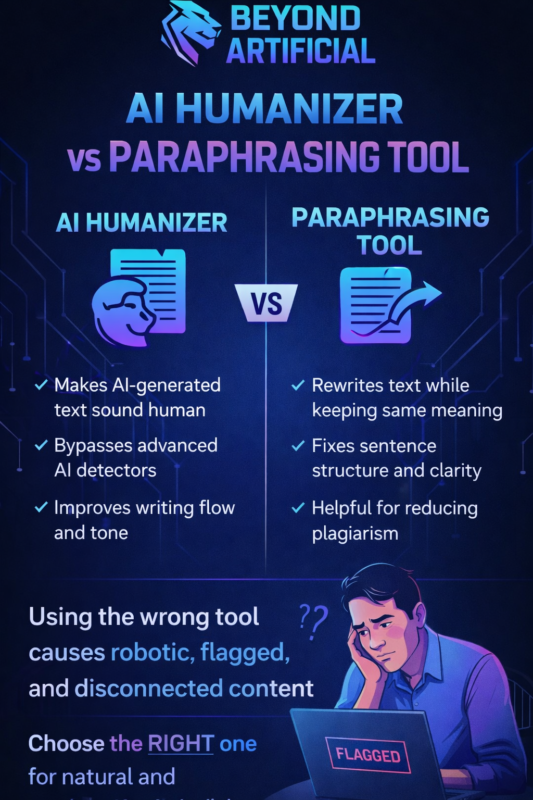
Many content creators often ask the same question: Which AI humanizer vs paraphrasing tool is better? Choosing the wrong tool can make writing harder, reduce content quality, and waste valuable time. Both tools are designed to improve content, but they work in different ways. An AI humanizer focuses on making AI-generated text sound more natural and human, while a paraphrasing tool rewrites sentences using different words while keeping the original meaning.
Understanding the difference between these tools is important for bloggers, marketers, students, and writers who want to create clear and engaging content.
In this guide, we will explore 9 key truths about AI humanizers and paraphrasing tools so you can understand when to use each one and choose the right tool for your content.
Your creativity and time deserve a better solution. So keep reading, and with the right tools, you can rewrite content faster, improve clarity, and focus more on creating great ideas instead of struggling with endless edits.
If you want to improve AI-written content, explore our guide on the Best AI Humanizer Tool and also check the Best Paraphrasing Tools for Content Creation to find the right rewriting tools for your workflow.
1. What Exactly Is the Difference Between an AI Humanizer and a Paraphrasing Tool?
An AI humanizer and a paraphrasing tool may seem similar, but they serve different purposes in content creation. A Paraphrasing tool mainly rewrites sentences. It replaces words with synonyms, changes sentence structure, and improves clarity while keeping the original meaning. An AI humanizer, on the other hand, focuses on making AI-generated text sound more natural and human. It improves tone, sentence flow, and writing patterns so the content reads more like it was written by a person.
The key difference is simple:
- Use a paraphrasing tool when you want to rewrite or simplify content.
2. Use an AI humanizer when you want AI-generated text to sound more natural and human.
Understanding this difference helps writers choose the right tool and create clearer, more engaging content.
2. Why Most Content Creators Are Secretly Using the Wrong Tool Without Even Realizing It.
Many content creators make a common mistake when rewriting content. Instead of choosing the right tool for the job, they often use the same tool for everything without realizing it. Most writers automatically use a paraphrasing tool whenever they need to rewrite text. While paraphrasers are great for improving clarity and changing sentence structure, they are not designed to make AI-generated content sound fully human.
This is where the confusion happens. When creators try to use a paraphrasing tool to fix AI-generated text, the content can still sound robotic or get flagged by AI detection tools. The solution is simple:
1.Use a paraphrasing tool when you want to rewrite or simplify content.
2. Use an AI humanizer when you want AI text to sound more natural and human.
By understanding when to use each tool, content creators can improve their writing quality, save time, and avoid common rewriting mistakes.
3. Which Tool Wins for Bypassing AI Detectors, and Why the Answer Shocks Most People.
When it comes to bypassing AI detectors, AI humanizers usually perform better than paraphrasing tools. This is because many AI detectors analyze writing patterns, sentence structure, and tone rather than just individual words. A paraphrasing tool mainly changes words and sentence structure. While this can improve clarity, it may not remove the deeper patterns that AI detection systems look for.
An AI humanizer, however, focuses on making AI-generated text sound more natural and human. It adjusts tone, writing flow, and sentence patterns, which can reduce the chances of the content being flagged by some detection tools. For better results, many creators test their content using AI detection platforms before publishing. This helps them see whether the text needs further editing or improvement.
Understanding the difference between these tools can help writers choose the right option and create more natural, readable content.
4. How Non-Native English Speakers Can Use Both Tools to Sound Fluently Professional
Many non-native English speakers know exactly what they want to say, but sometimes their ideas come out sounding awkward or unclear. This can make writing feel frustrating, especially when trying to sound professional. Using both a paraphrasing tool and an AI humanizer can help solve this problem.
A simple strategy is to start with a paraphrasing tool. It helps correct grammar, improve sentence structure, and make your writing clearer. After that, you can use an AI humanizer to make the text sound more natural and fluent. This step helps improve tone, rhythm, and overall readability. A helpful tip is to write your first draft freely, without worrying too much about perfect English. Then use these tools to refine and improve your content.
When used together, paraphrasing tools and AI humanizers can help non-native speakers create clear, professional, and natural-sounding writing.
5. The Truth About Why Paraphrasing Tools Alone Keep Failing You
Many content creators rely only on paraphrasing tools to rewrite their content. While these tools are useful, they cannot solve every writing problem. Paraphrasing tools mainly help with changing words, improving sentence structure, and making content clearer. However, they do not always fix deeper issues like robotic tone or AI writing patterns.
This is why content may still sound unnatural or get flagged by AI detection tools even after being paraphrased. The key is to first understand your goal.
- If you want to improve clarity or rewrite sentences, a paraphrasing tool works well.
2. If you want AI text to sound more natural and human, you may need an AI humanizer.
Using the right tool for the right task helps save time and improves the overall quality of your content.
6. What AI Humanizers Actually Do That Paraphrasing Tools Simply Cannot.
AI humanizers and paraphrasing tools both help improve content, but they work in different ways. A paraphrasing tool mainly changes words and sentence structure. It replaces synonyms and rewrites sentences while keeping the original meaning. An AI humanizer goes further than that. It focuses on making AI-generated content sound more natural and human. It improves tone, writing flow, and sentence patterns so the content feels less robotic.
AI humanizers also try to reduce the common patterns found in AI-generated text. This helps the writing feel more natural and easier for readers to connect with.A good practice is to review the content after using a humanizer to make sure it still sounds clear and natural.
By understanding this difference, writers can choose the right tool and create content that is clearer, more natural, and more engaging.
7. The Perfect Winning Combination Strategy That Uses Both Tools Together Powerfully
The most effective approach is not choosing between an AI humanizer and a paraphrasing tool, but using both tools together in the right order. This helps improve content quality and make the writing sound more natural. A simple two-step strategy works well:
Start with a paraphrasing tool. Use it to improve sentence structure, fix grammar, and make your content clearer. Then use an AI humanizer. This step helps make the text sound more natural, smoother, and closer to human writing. Using both tools together combines their strengths. The paraphrasing tool improves structure and clarity, while the humanizer improves tone and flow. For better results, process your content in smaller sections instead of rewriting the whole article at once. This usually produces clearer and more natural output.
By following this simple two-step process, writers can create clean, readable, and more natural-sounding content.
8. The Budget Reality: Which Tool Gives You More Value Without Draining Your Wallet?
When it comes to cost, paraphrasing tools are usually more affordable than AI humanizers. Many popular tools like QuillBot, Spinbot, and Paraphraser.io offer free plans or low-cost subscriptions that are suitable for students, bloggers, and freelancers. Paraphrasing tools are a good option if your main goal is to rewrite content, improve clarity, or reduce plagiarism.
AI humanizers, on the other hand, are often more expensive. They focus on making AI-generated content sound more natural and human, which requires more advanced technology. A simple way to choose the right tool is to look at your needs:
1. If you mostly need basic rewriting and editing, a paraphrasing tool is usually enough.
2. If you often work with AI-generated content, an AI humanizer may be worth the extra cost.
Before paying for any tool, it is a good idea to try the free version or trial first. This helps you see whether the tool is useful before committing to a subscription.
9. How to Test Any Tool Before Trusting It With Your Most Important Content.
Before using a new paraphrasing tool or AI humanizer on important content, it is important to test it first. This helps you understand how the tool works and whether it produces good results. A simple testing process can help you evaluate any tool.
First, test the tool with sample content instead of your main article. This allows you to see how well it rewrites sentences and improves clarity. Second, check the rewritten content with AI detection tools if you are working with AI-generated text. This helps you see whether the output still shows AI patterns. Third, read the final result carefully. Make sure the text still sounds natural, clear, and easy to understand.
It is also helpful to test the tool with different types of content, such as conversational writing, academic text, or marketing content. This shows how well the tool works in different situations. By testing a tool before using it on important work, you can avoid mistakes and choose the best option for your content.
10. The Final Honest Verdict: Which Tool Does Your Specific Content Actually Need Right Now?
The answer is simple: it depends on your goal. If you want to improve clarity, rewrite sentences, or reduce plagiarism, a paraphrasing tool is usually the best option. If you want AI-generated text to sound more natural and human, an AI humanizer is the better choice. Neither tool is better in every situation. The right tool depends on what you want to achieve with your content. A helpful approach is to follow this simple guide:
Paraphrasing tool: for rewriting and improving clarity
AI humanizer: for making AI text sound more natural
Both tools together: for the best overall content quality
By understanding when to use each tool, you can create clearer, more natural, and more effective content.
FREQUENTLY ASKED QUESTIONS (FAQs)
Can Paraphrasing Tools Avoid AI Detection?
Paraphrasing tools can change wording and sentence structure, but they usually do not remove deeper AI writing patterns. Because of this, paraphrased content may still be detected by AI detection systems.
Do AI Humanizers Really Work?
AI humanizers work by adjusting tone, structure, and writing flow to make text sound more like it was written by a human. They are commonly used to improve readability and natural writing style.
Which Tool Is Better for Content Creators?
Paraphrasing tools are mainly designed to rewrite sentences, replace words with suitable synonyms, and improve the clarity and structure of your content. They are useful when you want to refresh existing text, avoid repetition, or make your writing easier to read while keeping the original meaning.
AI humanizers, on the other hand, focus on making AI-generated content sound more natural and human. They improve tone, sentence rhythm, and writing flow so the text feels less robotic and more engaging for readers.
In many cases, content creators use both tools together: a paraphrasing tool to improve structure and clarity, and an AI humanizer to add a more natural, human-like writing style.
Can You Use an AI Humanizer and Paraphrasing Tool Together?
Yes, many writers start by using a paraphrasing tool to improve sentence structure and clarity. After that, they use an AI humanizer to make the text sound more natural and human. Using both tools together can help create clearer and more natural-sounding content.
What Is the Best Way to Improve AI-Generated Content?
The best approach is to carefully review and edit your content before publishing. Focus on improving sentence flow and clarity so the text is easier to read. You can also use tools like paraphrasers or AI humanizers to make the content clearer and more natural.
Difference between AI humanizer and paraphrasing tool
If your rewritten content still sounds robotic or does not connect well with readers, the problem may be using the wrong tool. Understanding the difference between an AI humanizer and a paraphrasing tool can help you choose the right solution for your content. A paraphrasing tool focuses on rewriting sentences. It changes words with synonyms, improves sentence structure, and makes the text clearer while keeping the same meaning.
An AI humanizer works differently. It improves the tone and flow of AI-generated text so the content sounds more natural and human. These tools solve different problems:
1. Paraphrasing tools help improve clarity and rewrite sentences.
2. AI humanizers make AI-generated text sound more natural.
3. Paraphrasing tools are useful for rewriting and reducing repetition.
4. AI humanizers help improve the natural tone of AI content.
5. Using both tools together can help create clearer and more natural-sounding content.
Once you understand how each tool works, it becomes easier to choose the right one for your writing needs.