
 YouTube Automation
How to Offer Freelance Digital Services Globally-9 best Ways(Blog#:08)

Tired of working long hours for a fixed salary while others build freedom through freelancing? The truth is, learning how to offer freelance digital services globally is not just about earning more money; it’s about taking control of your time, your income, and your future.
Right now, somewhere in the world, a client is searching for the exact skills you already have. But if you do not know the right ways to reach them, they may never find you. You might feel stuck watching opportunities pass by, while others land international clients, and your dream of working from anywhere feels far away. But what if you discovered powerful strategies that could help you stand out, attract the right clients, and get paid what your skills truly deserve?
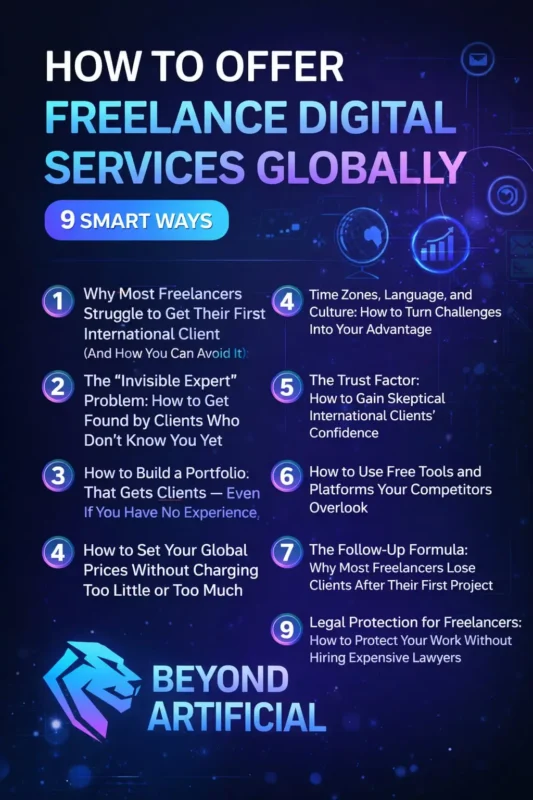
Keep reading to learn the smart strategies that turn your skills into high-paying freelance opportunities worldwide!
1. The Follow-Up Formula: Why Most Freelancers Lose Clients After Their First Project
You just finished a project, delivered amazing work, the client loved it, and even paid you on time, but then… silence. Here is the truth: most freelancers think that once a project is done, the job is over. But actually, completing a project is just the starting point for building long-term income. This is exactly why many freelancers lose clients after just one project. The problem is simple: freelancers often disappear after hitting “submit,” leaving clients feeling forgotten. Meanwhile, your competitors make the same mistake, forcing clients to look for someone new next time.
The solution is easier than it sounds. Start by sending a friendly check-in email 2-3 weeks after project delivery. Ask how things are going and if they need any tweaks. Doing this alone can double your repeat client rate. Next, schedule a value-add follow-up 60-90 days later. Share something helpful like a tip, article, or insight related to their industry. Do not sell anything, just stay helpful and keep yourself top of mind. To make it consistent, create a simple spreadsheet to track past clients and set calendar reminders. This way, following up becomes automatic, not something you try to remember.
When clients feel noticed and cared for even after the money is in your account, they will not just hire you again; they will become your best referral source, sending new opportunities your way without you even asking.
2. Why Most Freelancers Struggle to Get Their First International Client (And How You Can Avoid It)
You have the skills, and your profiles are ready, but that first international client still feels far away. It’s frustrating and can make you wonder if global freelancing is possible for you. Most freelancers fail not because they lack talent, but because they are invisible to clients actively searching right now. International clients scroll past empty profiles, generic pitches, and beginners.
Your first step is building credibility, even before paid work. Offer one free or discounted project, document before and after results, and turn it into a portfolio case study. Be active in niche Facebook groups, Reddit, or Slack, answer questions generously, and let your expertise show. Optimize your LinkedIn headline with results-focused language like “I help e-commerce brands increase email revenue by 30%.”
Combine visible proof with strategic visibility, and that first international client stops being “if” and becomes “when.”
3. The “Invisible Expert” Problem: How to Get Found by Clients Who Do not Know You Yet.
You are amazing at what you do, but here is the hard truth: if clients can not find you when they are urgently looking for help, your expertise might as well not exist. Being an “invisible expert” means losing dozens of potential clients every week to freelancers who are not necessarily better; they are just easier to find. The gap between your talent and your income is not skill; it’s visibility, and the good news is you can fix it faster than you think.
Start by claiming and optimizing your Google Business Profile (yes, even as a freelancer) with your services, location, and client testimonials so you appear in local and global searches. Create content consistently, LinkedIn posts, Medium articles, or YouTube videos, that answer the exact questions your ideal clients are searching for late at night when they need help most. Use strategic keywords naturally in your profiles, bios, and portfolio descriptions, like “email marketing for SaaS companies” instead of just “marketer”, so search engines and platforms can match you with the right clients.
Also, join and contribute to Quora, industry forums, or popular posts in your niche, always giving value first and linking to your work second. Visibility is not about shouting louder; it’s about showing up consistently where your clients are already looking.
4. How to Build a Portfolio That Gets Clients, Even If You Have No Experience.
The “no experience, no clients, no clients, no experience” trap can feel like a cruel joke. Watching others land projects while you are stuck at square zero is frustrating. Here is the truth: clients do not care about how many years you have worked; they care about whether you can solve their problem. A smart portfolio can prove that, even if you have never been paid. The secret is creating work that shows results before anyone hires you, and it’s easier than you think.
Pick 2-3 types of projects you want to get hired for and create them as if a dream client commissioned them. For example: design a website mockup for a fictional coffee shop, write sample email campaigns for an imaginary skincare brand, or build a social media strategy for a made-up coaching business. You can also reach out to a small business, nonprofit, or friend’s startup and offer a real free project in exchange for a detailed testimonial and permission to showcase your work. Real results are always stronger than hypothetical samples.
Document your process with before-and-after comparisons, metrics (even estimated ones like “this strategy could increase open rates by 25%”), and the problem solution story behind each piece. Present everything professionally on a simple website using free tools like Wix, Notion, or even a well-organized Google Drive folder.
When you do this, you are no longer someone with “no experience”; you are someone with proof that you can deliver results.
5. How to Set Your Global Prices Without Charging Too Little or Too Much
Pricing yourself for global clients can feel like walking a tightrope. Charge too little, and you are buried in work while barely covering expenses. Charge too much, and clients disappear before you even finish your pitch. The fear of losing clients often makes freelancers undervalue themselves, while seeing competitors charge much more for the same work can feel frustrating. Here is the truth: global pricing is not about matching rates in Mumbai or Manhattan. It’s about charging for the value you provide, not your living costs or the client’s location.
Start by researching what your target clients pay, check freelance platforms, ask peers, or look at competitor packages. Use tiered pricing: a basic package for budget clients, a standard package for most, and a premium package for those who want the full experience. This lets clients choose, instead of you guessing their budget.
Always frame your prices around results, not hours. For example: “this will increase conversions by X” or “save you 10 hours per week.” Clients pay more for outcomes, not time spent.
Test your pricing. If 80%+ of your pitches are accepted, you are likely charging too little. If less than 20% are booked, you may be charging too much for your current credibility. Adjust based on real feedback, not fear, until you find the sweet spot where you are profitable, confident, and attracting clients who value your work.
6. Time Zones, Language, and Culture: How to Turn Challenges Into Your Advantage
The moment you land that dream international client, panic can set in. They are 12 hours ahead, speak English with an accent that’s hard to follow, and communicate in a way that feels completely different. Most freelancers see time zones, language, and cultural differences as problems, apologize for them, and watch clients lose confidence. But here is the powerful shift: these challenges can actually be your secret advantage if you handle them strategically.
Use time zones to your benefit. Work while your client sleeps, send updates, completed tasks, or solutions so they see progress first thing in the morning. This makes you look efficient and dedicated. Over-communicate in writing. Use Loom videos, detailed briefs, and follow-up summaries after every call. Clarity matters more than perfect grammar. Learn about your client’s cultural communication style. Some cultures prefer directness, others value relationship-first approaches. Adjust your tone so they feel understood and respected.
Offer flexible meeting times with tools like Calendly, and occasionally take early morning or late-night calls. Showing you are willing to meet them halfway builds trust faster than any local competitor ever could. When you turn these “challenges” into advantages, clients see you as reliable, adaptable, and impossible to replace.
7. The Trust Factor: How to Gain Skeptical International Clients’ Confidence
International clients have been burned before; they have lost deposits, worked with freelancers who vanished mid-project, or paid for promises that went nowhere. Their skepticism is not personal; it’s survival. Every question they ask is really: “How do I know you will not be another expensive mistake?” Here is the truth: trust is not built with fancy credentials or long explanations; it’s built with proof and reducing their risk.
Start with a small pilot project at a reduced rate so your work can speak for itself. Provide clear proposals with timelines, milestones, and deliverables so there is no confusion. Share testimonials, case studies, or video reviews, even from local or discounted projects. If possible, get LinkedIn endorsements that international clients can verify. Use professional contracts and invoicing (tools like Bonsai or HoneyBook work well) to show you are serious and reliable.
Communicate obsessively, update them before they ask, reply within 24 hours, and never leave them wondering about the project. When clients see consistency, transparency, and professionalism at every step, their trust grows, and you become the partner they have been searching for.
8. Legal Protection for Freelancers: How to Protect Your Work Without Hiring Expensive Lawyers
You have put your heart into a project, delivered amazing work, and then it happens: the client does not pay, uses your work without permission, or disappears completely. It’s scary, especially when working internationally, but hiring expensive lawyers is not realistic when you’re just starting. The good news: you can protect yourself legally with simple, low-cost tools that work across borders.
Always use a written contract before starting work. Free templates from Bonsai, HoneyBook, or AND CO cover payment terms, revisions, ownership rights, and cancellations, giving you protection without lawyer fees. Require a 50% upfront deposit and 50% before final delivery, so you are never fully exposed if a client disappears. Clearly state intellectual property rights, noting that you keep ownership until full payment and that clients cannot resell or claim your work.
Use payment platforms like PayPal, Wise, or Payoneer, which offer built-in dispute protection, much safer than direct bank transfers. Document everything, save emails, messages, approved drafts, and communication in organized folders. This paper trail is your strongest protection if disputes arise, without spending a penny on attorneys.
9. How to Use Free Tools and Platforms Your Competitors Overlook
You see competitors landing clients while you feel like you need expensive software, memberships, and fancy tools just to compete. Here is the good news: some of the best client-getting platforms are completely free, and most freelancers do not use them. While everyone fights for scraps on crowded platforms like Upwork and Fiverr, huge opportunities are sitting untapped. The smartest move is to claim your space on these overlooked platforms before your competitors catch on.
Start with a Google Business Profile (100% free). Add your services, portfolio images, and client reviews to show up in Google Maps and search results where clients are actively looking. Try Contra.com, a commission-free platform where you keep 100% of your earnings. Its portfolio-focused interface makes you look professional, unlike crowded Upwork profiles.
Join niche communities on Reddit, Discord, or Facebook related to your industry (like r/forhire or industry-specific groups) where businesses post projects with very little competition. Use free tools to level up your presentation: Canva for proposals, graphics, and portfolio slides; Notion to create a sleek, interactive portfolio website; Calendly for easy scheduling; and Loom for personalized video proposals.
When you combine these zero-cost tools strategically, you are not just keeping up, youare dominating the space while competitors are still spending money on subscriptions.
FREQUENTLY ASKED QUESTIONS(FAQs)
How to offer freelancing services?
Start by making profiles on popular platforms like Upwork, Fiverr, or Freelancer. Show your skills with a strong portfolio that proves you can deliver results. Network actively on LinkedIn and social media, reaching out directly to clients who need what you offer. Set fair rates, deliver excellent work, and let your five-star reviews help attract more clients.
What are the 5 main strategies of digital marketing?
The five main strategies of digital marketing are simple but powerful. SEO helps you get found on Google, while content marketing lets you create valuable content that people actually want. Social media marketing connects you with your audience where they spend their time, and email marketing turns subscribers into loyal customers. Finally, paid advertising brings instant traffic to your offers. Mastering all five strategies lets you attract, engage, and convert your ideal audience into paying clients.
How to get international clients as a freelancer?
Join global freelancing platforms like Upwork, Fiverr, and Toptal, where clients from all over the world are looking for talent. Make your profile stand out with keywords international clients search for and show a portfolio that proves your skills. Do not hesitate to reach out directly to businesses abroad via LinkedIn or email. Use time zones to your advantage, offer flexible availability and watch clients from New York to Tokyo line up to work with you.
Which country is no. 1 in freelancing?
The United States leads the freelancing world with the most freelancers and the biggest market. But countries like India, Pakistan, and Bangladesh are powerhouses for talent and competitive pricing. India, in particular, shines in tech freelancing, with skilled developers, designers, and digital marketers flooding platforms like Upwork and Fiverr. The top spot may shift, but these countries are always among the leaders in the global gig economy.
What is the golden rule of marketing?
The golden rule is simple: always put your customer first. Focus on solving their problems, not just selling your product. Understand their needs, desires, and struggles, and create messages that speak directly to them. When you genuinely help people get what they want, they will reward you with loyalty, money, and word-of-mouth recommendations that no marketing budget can buy.
How to start freelance marketing with no experience
Staring at marketing job posts that ask for 3-5 years of experience when you have none feels like being locked out of a club where everyone else is making money, right? It’s frustrating knowing you could help businesses grow, but having no proof, no clients, and no clue where to start can paralyze you. Every day you wait feels like opportunities slipping away. You have Googled “how to start,” watched endless YouTube videos, but you are still stuck because nobody is giving real, actionable first steps that do not need experience.
The truth is: marketing expertise is not about fancy degrees or corporate years; it’s built by doing, testing, and showing results. Someone out there needs your help right now, but the invisible wall between you and them is simple: you have not taken the first brave step to create your own experience.
Here’s what keeps most beginners stuck:
The experience paradox: clients want proof, but how do you get proof without clients?
Too many skills: marketing has social media, email, SEO, ads… It’s hard to know where to focus first.
Imposter syndrome: the fear that you are “not qualified enough,” even after learning for months.
The portfolio problem: guides say “build a portfolio,” but what if you have never had a real client?
Pricing panic: You do not know what to charge without undervaluing or overpricing yourself.
