
 YouTube Automation
Why Entrepreneurs Need Video Editing in 2026 – 7 proven ways(Blog#:06)

Have you ever seen your competitor’s video go viral while your great idea gets ignored? In 2026, entrepreneurs who understand video editing are not just posting content; they are building strong brands, one video at a time. The reality is clear: Why Entrepreneurs Need Video Editing in 2026 is not just about following trends. It’s about surviving and growing in a fast-moving digital world where people scroll in seconds and decide instantly what to watch.
You may have the vision, the passion, and an amazing product that can truly help people. But without good video editing, your message can easily get lost. While others use engaging, well-edited videos to grab attention, your content might go unnoticed. And in today’s online world, attention is everything.
That’s why video editing is so powerful. It helps you tell your story clearly, connect with your audience emotionally, and stand out from the competition. In this article, I will share seven proven ways video editing can turn struggling entrepreneurs into strong, magnetic brands that people love to watch, share, and buy from.
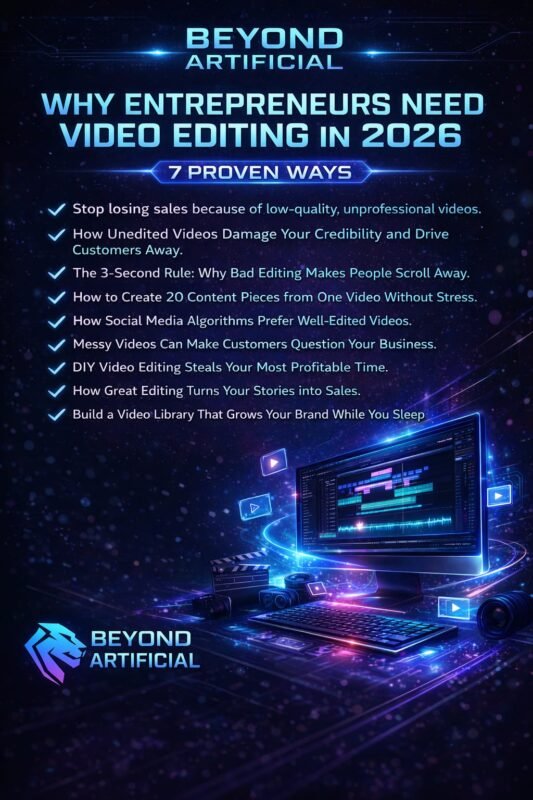
Keep reading to discover some proven ways video editing can turn your ideas into powerful, attention-grabbing content that grows your brand and boosts sales, starting today.
1. Stop losing sales because of low-quality, unprofessional videos
Imagine a potential customer landing on your page, seeing a blurry, shaky video with poor lighting, and leaving within seconds to buy from your competitor; that’s not just a lost view, it’s lost revenue. When your video looks unprofessional, people assume your business is unprofessional too, and trust disappears instantly. Most of the time, the issue isn’t your product; it’s how you present it.
Simple improvements can make a huge difference: use proper lighting (even an affordable ring light can transform your look), keep your camera steady with a tripod or gimbal, and make sure your audio is clear because clean sound builds trust faster than fancy visuals. Trim out unnecessary pauses and filler words to keep attention, use smooth transitions so the video feels polished, and always add captions since many people watch without sound.
You do not need a big budget; you just need to show that you care about the experience you are delivering, because when people see that effort, they trust you more and are far more likely to buy.
2. How Unedited Videos Damage Your Credibility and Drive Customers Away
When you post raw, unedited videos, it can feel like you are telling your audience you did not care enough to improve them, and people notice. A messy, unstructured video makes you look less professional, even if you are truly an expert. Many viewers judge your whole business based on that one video, so first impressions really matter.
To protect your reputation, create a simple brand style guide: choose two or three fonts, pick consistent colors, and use them in every video so your content looks cohesive. Plan what you are going to say with short bullet points or a basic script to avoid rambling and wasting time. Edit out unnecessary parts, add a clean intro with your logo using simple tools like Canva, and always finish with a clear call-to-action so viewers know what to do next.
Think of editing like preparing for an important meeting; you would not show up looking careless, so do not let your videos look unprepared either.
3. The 3-Second Rule: Why Bad Editing Makes People Scroll Away
You only have about three seconds to grab someone’s attention before they scroll away, and weak editing can lose them instantly. A slow intro, long pause, or boring beginning makes people leave before your message even starts. Online attention spans are short, so your first few seconds need to be strong and interesting.
Instead of saying “Hey guys” or adding a long intro, start with your most exciting or surprising point right away, something that makes people curious and keeps them watching. Use quick cuts, small zoom-ins, on-screen text, or visual changes every few seconds to keep the video dynamic; boring, static shots make viewers lose interest fast. Tease the main benefit early, like “Here’s how I made $10K in one week,” instead of slowly building up to it. Keep movement and energy throughout the video with B-roll, graphics, or angle changes.
Remember, you are not just competing with other businesses; you are competing with everything fun and distracting on the internet, so your editing needs to keep people hooked from the very first second.
4. How to Create 20 Content Pieces from One Video Without Stress
Imagine recording just one video and turning it into content for the whole month; that’s not magic; it’s smart editing. Many entrepreneurs feel exhausted because they try to create new content every single day, while others record once and reuse it everywhere. The key is to work smarter, not harder.
Take one strong video and pull out 3–5 short, powerful clips (15–30 seconds each) and post them as Reels, TikToks, or YouTube Shorts with bold captions. You can also extract the audio and use it as a podcast episode or a LinkedIn voice note for people who prefer listening. Turn your best quotes into simple branded graphics using Canva for Instagram posts or Pinterest pins. Then take the full transcript, clean it up, and turn it into a blog post or email newsletter for readers who like written content.
You are not creating new ideas again and again; you are simply repackaging the same valuable message in different formats. This way, you stay visible on every platform without burning out or sacrificing your weekends.
5. How Social Media Algorithms Prefer Well-Edited Videos
Here’s the simple truth: social media platforms push videos that keep people watching, and if your editing is weak, your content will not reach many people. When someone scrolls away after two seconds, the platform assumes your video is not interesting and shows it to fewer viewers. That’s why good editing matters so much.
Start with a strong hook in the very first second, so people do not leave right away. Keep your video engaging with quick cuts and no long pauses, so viewers watch until the end. Add captions, since many people watch without sound, and this helps keep their attention. Include moments that encourage people to save or share your content, like a helpful tip, surprising fact, or bold opinion, because these actions tell the platform your video is valuable. You can also use trending audio in a way that fits your message naturally.
Most importantly, check your analytics to see where people stop watching, and improve those parts next time. Platforms reward content that keeps getting better and holds attention.
6. Messy Videos Can Make Customers Question Your Business
When someone watches a messy, unorganized video with bad transitions and inconsistent branding, they quickly start doubting your professionalism. They may think, “If this person cannot edit a simple video properly, how will they handle my project or deliver quality work?” It may not be completely fair, but people often judge your business based on how your content looks.
A sloppy video can create doubt, even if your product or service is excellent. That’s why it’s important to keep your branding consistent, use the same intro style, similar colors, and a clean, professional look in every video. Make sure your audio is clear, because poor sound quality makes you seem careless. Keep your message focused and avoid rambling so viewers feel confident in your ability to deliver. Use simple, neat graphics and text that look planned and intentional.
When your videos feel organized and polished, people are more likely to trust you and choose your business.
7. DIY Video Editing Steals Your Most Profitable Time
Spending six hours struggling with editing software, searching “how to remove background noise,” and watching tutorials might feel productive, but it often takes you away from more important work. This is especially true with DIY video editing. DIY means “Do It Yourself,” which is when you handle everything on your own instead of hiring a professional.
While doing it yourself can save money at first, it can also cost you valuable time. If your time is worth $100–$500 per hour and you are spending it on tasks that could be outsourced for much less, you are losing opportunities to focus on sales, strategy, and growth. Instead, consider recording your videos in one focused session each week or month and then handing the footage to an editor. Use the extra time to build relationships, improve your offers, and close deals, activities that directly grow your business.
When you invest your time in high-value tasks and outsource lower-value ones like editing, your income can increase while your stress decreases, making it a smarter long-term decision.
8. How Great Editing Turns Your Stories into Sales
A raw story is just words and footage, but good editing turns it into something people truly feel. That’s the difference between someone saying, “Nice story,” and someone thinking, “I need this.” Strong editing highlights the right moments, lingering during emotional parts, speeding up less important sections, and using music to match the mood.
Without this, even a powerful story can feel flat and forgettable. Start your story with a relatable problem so viewers immediately see themselves in it. Use music carefully to support the emotion, uplifting during wins, softer during challenges. Add short pauses before important points to build anticipation. Include B-roll footage that visually shows what you are talking about, like scenes of struggle or success, so people can picture the journey. Finally, clearly show the transformation from “before” to “after.”
When people see and feel that change, they connect more deeply, and that emotional connection is what inspires them to take action.
9. Build a Video Library That Grows Your Brand While You Sleep
Imagine waking up to notifications that someone found a six-month-old video, watched your entire channel, and just bought your premium offer, all while you were relaxing. That’s the power of a well-edited, evergreen video library working 24/7 like your best salesperson. Most entrepreneurs treat videos as short-term posts that disappear after a couple of days, but smart creators build videos that keep attracting and converting customers for years without extra effort.
Start by creating 20–30 evergreen videos on your main topics, FAQs, tutorials, product demos, and transformation stories, and edit them professionally so they stay relevant. Organize them into playlists or sequences that guide viewers: hook them with awareness videos, build trust with educational content, show proof with testimonials, and close sales with clear calls-to-action. Optimize every video with keyword-rich titles, descriptions, and chapters so people can find them through Google and YouTube even months later. Then repurpose each video across platforms: a YouTube deep dive can become multiple TikToks, Instagram Reels, podcast episodes, and blog posts. This way, your videos keep working for you everywhere online while you focus on life, travel, or your next big project.
FREQUENTLY ASKED QUESTIONS (FAQs)
Is video editing a good career in 2026?
Absolutely, video editing is booming in 2026 because every business, creator, and entrepreneur needs skilled editors. Demand is huge, the pay is great ($50–$150+ per hour), and you can work from anywhere, even in your pajamas, while companies compete for your skills. If you know how to tell a story, manage pacing, and create content that grabs attention, you basically have a golden ticket in today’s digital economy.
What are the video editing trends for 2026?
In 2026, the top video trends are AI-assisted editing tools that save time (but human creativity still matters), super-fast cuts with constant movement to keep viewers engaged, and authentic content that feels real but still polished. Vertical videos rule since most people watch on their phones, captions are essential, and interactive features like polls, clickable links, and choose your own adventure videos are growing fast. The biggest change? Editors who combine emotional storytelling with smart, algorithm-friendly techniques are earning the most, while others fall behind.
Can AI replace video editors?
AI can handle the boring tasks like cutting silences, adding captions, and basic transitions, but it can not do the creative work that really connects with people. Only a human knows when to hold a shot for emotion, what music makes people feel or buy, and how to tell a story that touches hearts. Think of AI as your assistant; it does the grunt work fast, so you can focus on the creative choices that actually sell: timing, storytelling, and building your brand. In short, AI helps editors work faster and smarter, but it can not replace the human intuition that turns viewers into loyal fans and makes them share your content.
What are the video editing trends for 2026?
In 2026, the biggest video trends are super-fast cuts every 2–3 seconds to keep attention, AI tools handling boring tasks so humans can focus on creative storytelling, and vertical videos dominating because most people watch on their phones. Captions are now essential for silent scrolling, and authentic, slightly raw videos are beating overly polished ones because audiences want real connections. Interactive features like clickable links, shoppable videos, and personalized content are helping some creators win big while others fall behind.
Is there a future for video editors?
The future for video editors is brighter than ever. As video becomes the top content format on every platform, demand for skilled editors is growing faster than supply. AI can do the boring tasks, which actually makes talented editors even more valuable, because businesses need someone who understands storytelling, psychology, and brand strategy, not just software. If you can create videos that grab attention, build trust, and drive sales, you’ll always have clients willing to pay premium rates.
How difficult is it to learn video editing?
The truth? Video editing is not rocket science, but it’s not something you master in a weekend either. Think of it like learning to drive, clunky and awkward at first, but it becomes natural once you get the hang of it. You do not need Hollywood-level skills to make videos that grab attention and sell. What really matters is knowing the basics: storytelling, pacing, and what keeps people watching instead of scrolling past. Many beginners get stuck because they jump straight into complicated software without understanding why cuts, transitions, and timing matter; it’s like trying to write poetry before learning the alphabet.
The difficulty depends on your goal: simple social media videos? You can start seeing results in weeks. Cinematic, professional-level videos? That takes months of practice.
Here is what really matters when learning video editing:
Basic editing (cuts, captions, simple transitions): 2–4 weeks with daily practice using beginner-friendly tools like CapCut or iMovie.
Pacing and storytelling: 2–3 months of trial, error, and watching what works.
Platform-specific optimization: Ongoing, since trends and algorithms change, but patterns emerge after a few months.
Advanced skills (color grading, motion graphics, sound design): 6–12 months if you want professional-level work that commands high rates.
The biggest challenge isn’t the software: It’s training your eye to see what engages people, builds trust, and turns viewers into customers.
